
Rapid Review·General Pathology
Select any text to highlight it or add a note.
AGING
T2High yieldNormal Aging & Lipofuscin
P225
Focus on
The organ-by-organ decline that defines "normal" for an older patient, and knowing which changes are NOT normal aging.
Key takeaways
What aging is
Definition
aging is a time-dependent progressive decline in organ function → ↑ susceptibility to disease.- Associated with genetic (telomere shortening), epigenetic (DNA methylation), and metabolic (mitochondrial dysfunction) alterations.
Normal aging, organ by organ
Heart, lungs and kidneys
| System | Changes with Normal Aging |
|---|---|
| Cardiovascular | ↓ arterial compliance (↑ stiffness), ↑ aortic diameter, ↓ LV cavity size with a sigmoid interventricular septum, ↑ left atrial size, aortic and mitral valve calcification, ↓ maximum heart rate |
| Respiratory | ↑ lung compliance (↓ elastic recoil), ↓ chest wall compliance (↑ stiffness), ↓ respiratory muscle strength; ↓ FEV1, ↓ FVC, ↑ RV, with TLC UNCHANGED; ↑ A-a gradient, ↑ V/Q mismatch; blunted ventilatory response to hypoxia and hypercapnia; less vigorous cough and slower mucociliary clearance |
| Renal | ↓ GFR from ↓ nephron number, ↓ renal blood flow, ↓ hormonal function, voiding dysfunction |
Blood and immunity
| System | Changes with Normal Aging |
|---|---|
| Hematopoietic | ↓ bone marrow mass, ↑ bone marrow fat, and a less vigorous response to stressors such as blood loss |
| Immune | Predominantly ADAPTIVE decline. Thymic involution → ↓ naïve T cells (and indirectly naïve B cells); memory B and T cells are PRESERVED → diminished response to NOVEL antigens such as new pathogens and vaccines |
Brain and senses
| System | Changes with Normal Aging |
|---|---|
| Nervous | ↓ brain volume from neuronal loss, ↓ cerebral blood flow, but function is PRESERVED despite mild cognitive decline |
| Special senses | Presbyopia (impaired accommodation), presbycusis (↓ high-frequency hearing), ↓ smell and taste |
Muscle, bone, skin and gut
| System | Changes with Normal Aging |
|---|---|
| Musculoskeletal | ↓ skeletal muscle mass (sarcopenia), ↓ bone mass (osteopenia), joint cartilage thinning |
| Skin | Atrophy with flattening of the dermal-epidermal junction; ↓ dermal collagen and elastin (wrinkles, senile purpura), ↓ sweat glands (heat stroke risk), ↓ sebaceous glands (xerosis) |
| Gastrointestinal | ↓ LES tone, ↓ gastric mucosal protection, ↓ colonic motility |
Reproductive
| System | Changes with Normal Aging |
|---|---|
| Reproductive | Males: testicular atrophy with ↓ spermatogenesis, prostate enlargement, slower erection and ejaculation, longer refractory period, and libido less reduced than in females. Females: vulvovaginal atrophy, vaginal shortening, thinning, dryness, and ↑ pH, all from ↓ estrogen after exhaustion of ovarian follicles |
Skin aging
Skin aging runs on two separate mechanisms
- Intrinsic (chronological): ↓ biosynthetic capacity of dermal fibroblasts.
- Extrinsic (photoaging): UVA degrades dermal collagen and elastin, and the degradation products accumulate as solar elastosis.
Lipofuscin
Lipofuscin
a yellow-brown "wear and tear" pigment of normal aging.- Composed of polymers of lipids and phospholipids complexed with protein, derived from lipid peroxidation of polyunsaturated membrane lipids.
- Found at autopsy in heart (brown atrophy), colon, liver, kidney, and eye.
A healthy 80-year-old has pulmonary function tests. Which of FEV1, FVC, residual volume and total lung capacity is unchanged by normal aging?
Total lung capacity. FEV1 and FVC fall and residual volume rises, but the lungs' ↑ compliance and the chest wall's ↓ compliance balance out, so TLC stays the same.
How it's tested
Two discriminators.
(1) In aging lungs, RV rises and FEV1/FVC falls, but TLC is UNCHANGED. The changes are a wash because ↑ lung compliance, from lost elastic recoil rather like mild emphysema, is offset by ↓ chest wall compliance.
(2) Immunosenescence is a defect of ADAPTIVE, not innate, immunity. Thymic involution shrinks the naïve T-cell pool while memory cells persist, which is precisely why an older adult responds poorly to a new influenza vaccine strain yet retains lifelong immunity to childhood infections.
Finally, a yellow-brown intracellular pigment in the cardiac myocytes of an elderly decedent is lipofuscin, the brown atrophy pigment. It is a normal, harmless marker of aging, not hemosiderin, which would be Prussian-blue positive.
Go deeper
First Aid "Cellular aging"; Boards & Beyond Aging. Anchor telomere shortening → replicative senescence (with telomerase reactivation in cancer/stem cells) and lipofuscin as the benign "wear-and-tear" lipid-peroxidation pigment.
Flashcards for this page
Card 1 of 5 · try-out only, nothing is saved
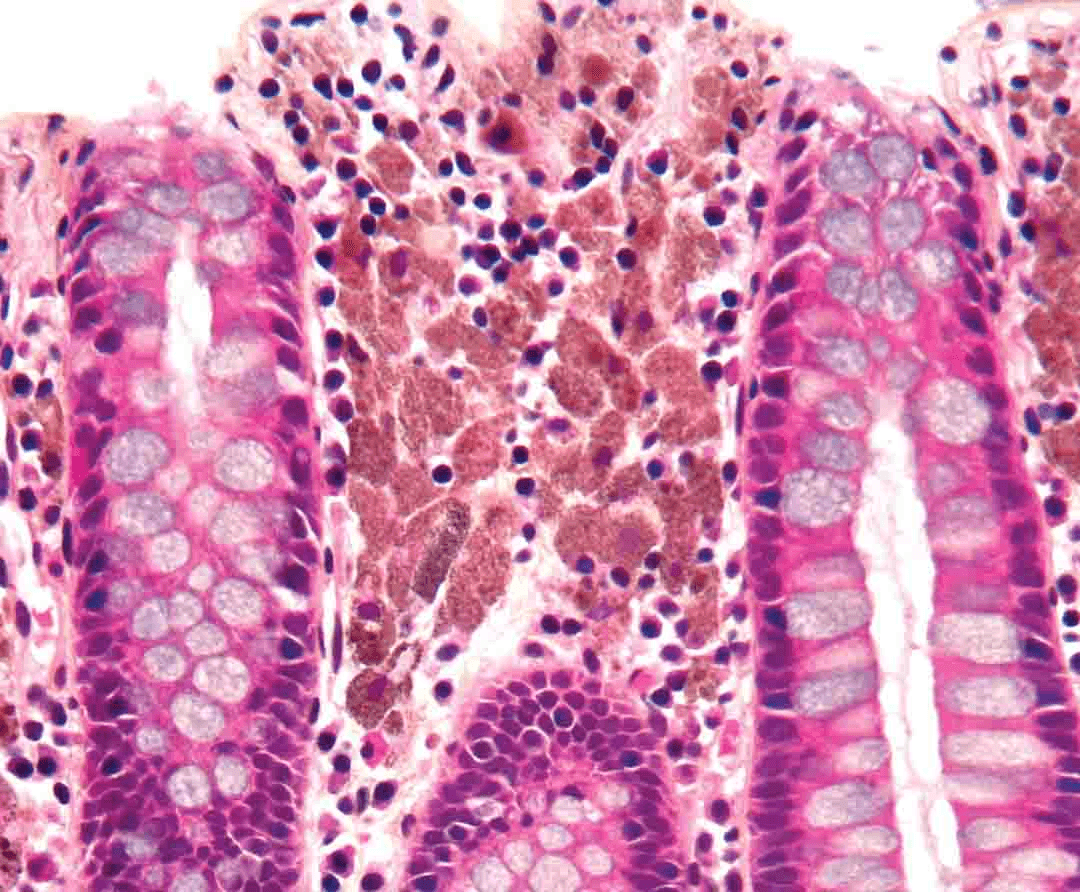
The yellow-brown pigments, called (...), are due to lipid (...) of polyunsaturated lipids of subcellular membranes
You just read one page of 944
The rest of Step 1, written exactly like this.
Rapid Review is the reading layer of a full Step 1 platform: a schedule fitted to your exam date, flashcards for every page, and a mentor a message away.
Every Step 1 system
Written the same way: what to know, how it’s tested, where to go deeper.
A plan built to your exam date
Tell us when you sit, and the schedule fits the whole library and your question bank to it.
Flashcards for every page
Ready-made spaced-repetition decks linked to each topic, so nothing you read gets forgotten.
