
Rapid Review·Cardiovascular
Select any text to highlight it or add a note.
Valvular Heart Disease
T1Must knowAortic Stenosis
Focus on
Calcific in the old, bicuspid in the young. Silent until severe, then the SAD triad — syncope, angina, dyspnea — a harsh late-peaking murmur to the carotids with a slow weak pulse. Severe AS plus symptoms, EF < 50% or other cardiac surgery means valve replacement: SAVR for the young and fit, TAVR for the old and high-risk. Never a stress test, never vasodilators.
Key takeaways
What it is and what causes it
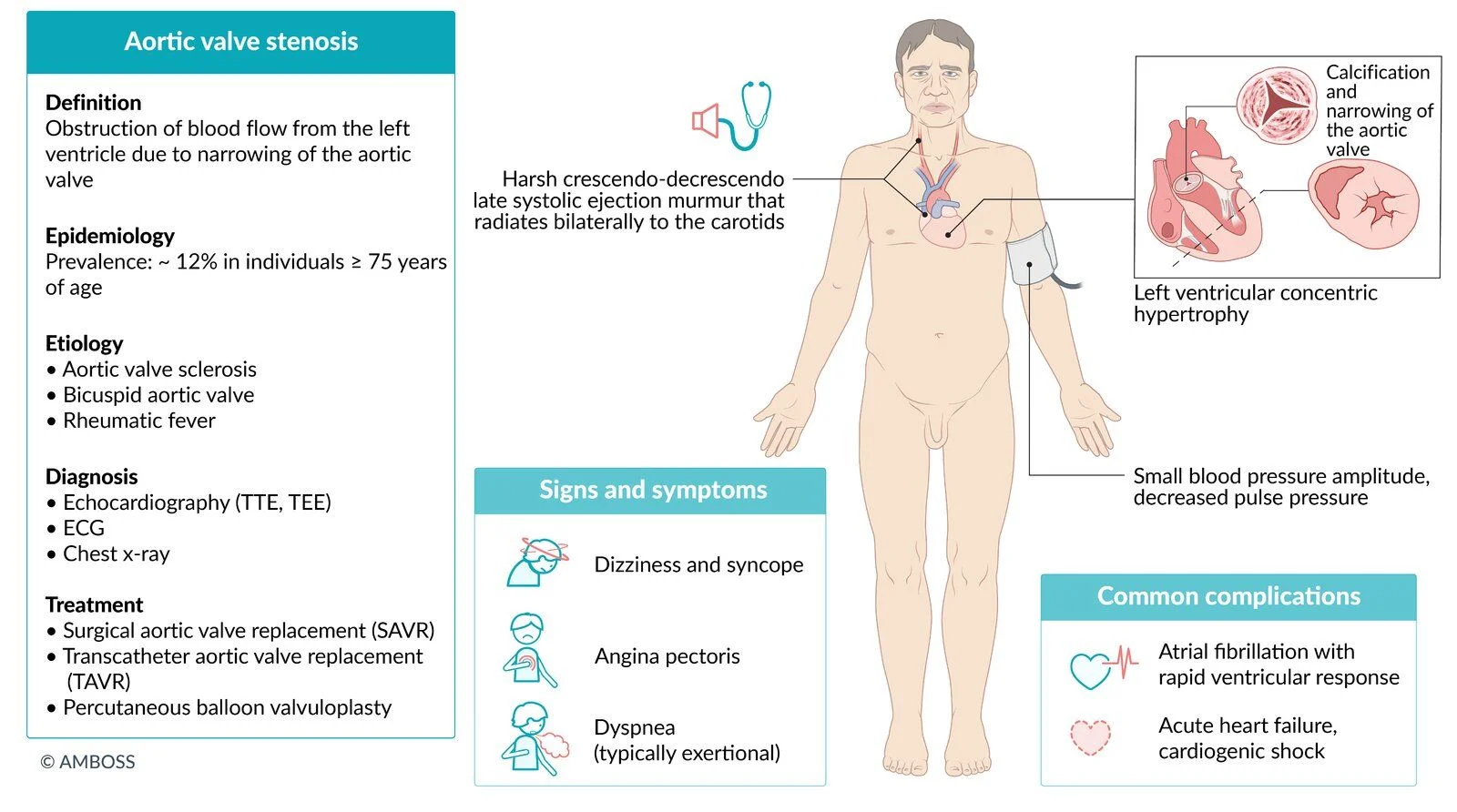
What this shows
Aortic stenosis
left ventricular outflow obstruction at the aortic valve.Age-related "wear and tear" calcification (aortic sclerosis)
the most common cause over 65.A bicuspid aortic valve
presents younger (Bicuspid Aortic Valve).Rheumatic disease
rare.Clinical features
Silent until severe
asymptomatic or non-specific until the stenosis is severe.Then the exertional "SAD" triad
syncope, angina, dyspnea (heart failure).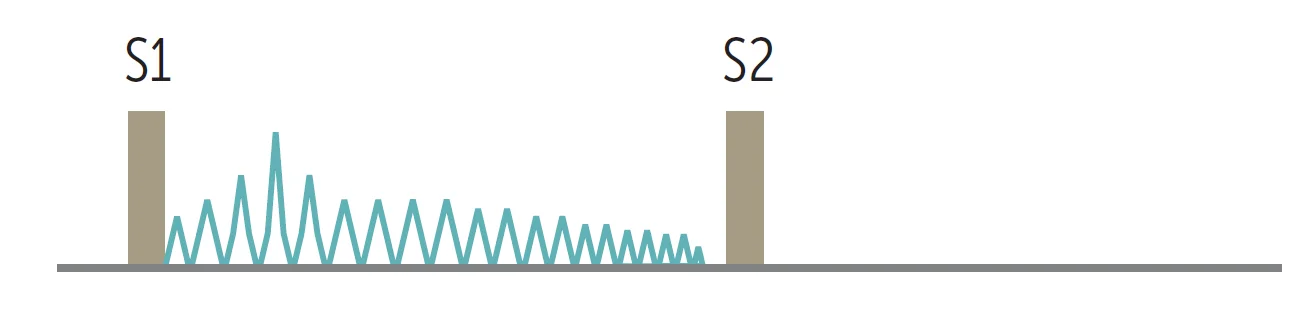
What this shows
The murmur
a crescendo-decrescendo systolic ejection murmur at the second right intercostal space that radiates to the carotids.- A soft S2 and an early systolic ejection click.
- An S4 is best heard at the apex.
Maneuvers
handgrip softens the murmur; Valsalva and standing from a squat also soften it (the opposite of hypertrophic cardiomyopathy).Signs of severe disease
four findings.- Weak, delayed carotid pulses (pulsus parvus et tardus).
- A narrow pulse pressure.
- A late-peaking murmur.
- A single S2 on inspiration (paradoxical splitting).
Diagnosis
Transthoracic echocardiography (TTE)
confirms it.Electrocardiogram
left ventricular hypertrophy.Severe stenosis
any one of three numbers.- Valve area under 1 cm2.
- Peak velocity over 4 m/s.
- Mean gradient over 40 mm Hg.
Management
Aortic valve replacement
for severe stenosis plus any one of three.- Symptoms.
- A left ventricular ejection fraction under 50 percent.
- Another cardiac operation.
Surgical replacement
for patients under 65 with a life expectancy over 20 years.Transcatheter aortic valve replacement (TAVR)
for patients over 80, a life expectancy under 10 years, or high surgical risk, as in the See how transcatheter valve replacement works.- Its complications are aortic regurgitation, and stroke from calcium of the native valve that breaks off and embolizes.
Percutaneous balloon valvuloplasty
for children, adolescents and young adults; it has little role in older patients.Supravalvular aortic stenosis
A narrowing above the valve
a congenital narrowing of the ascending aorta rather than the valve.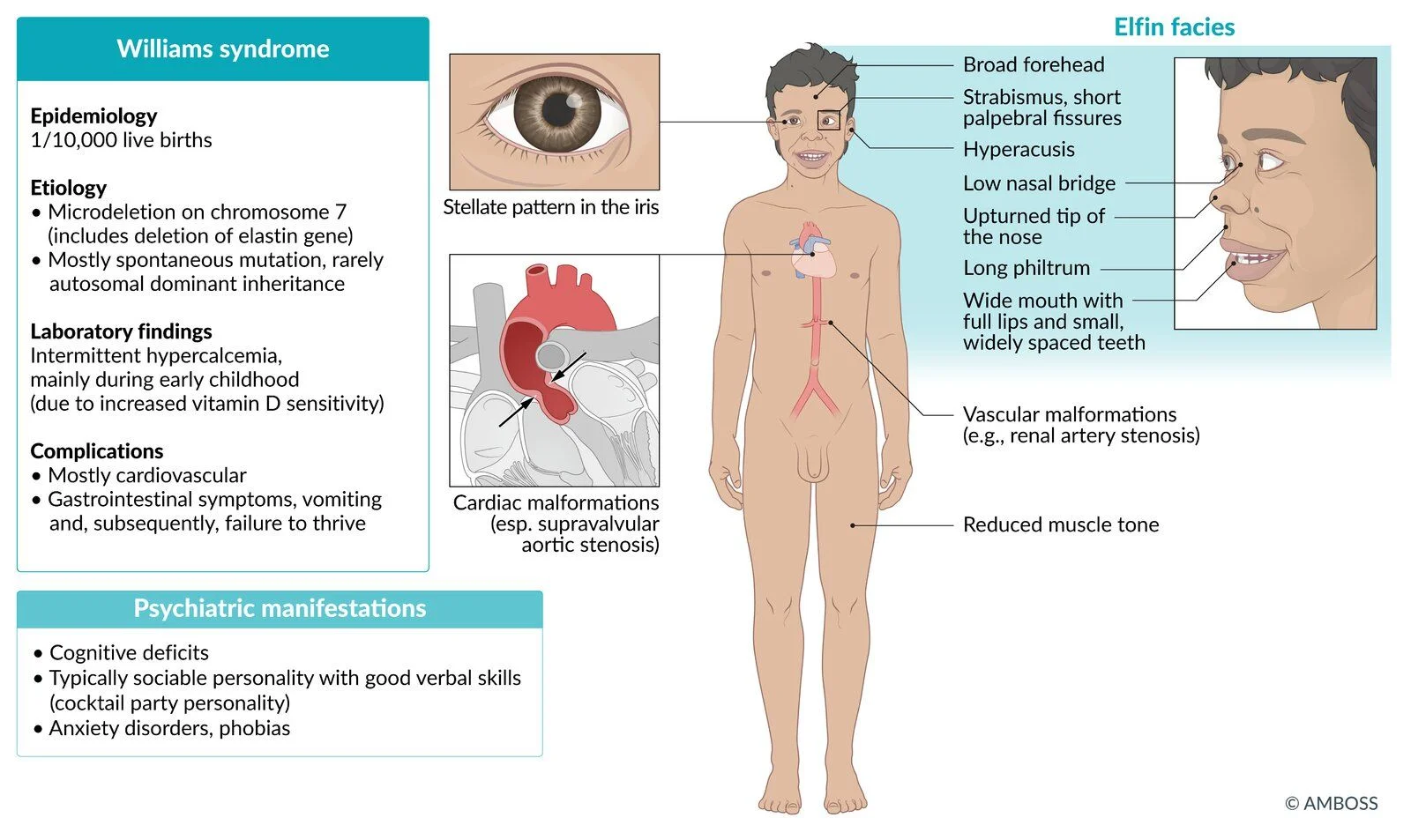
What this shows
Williams syndrome
strongly associated (hypersociability, elfin facies).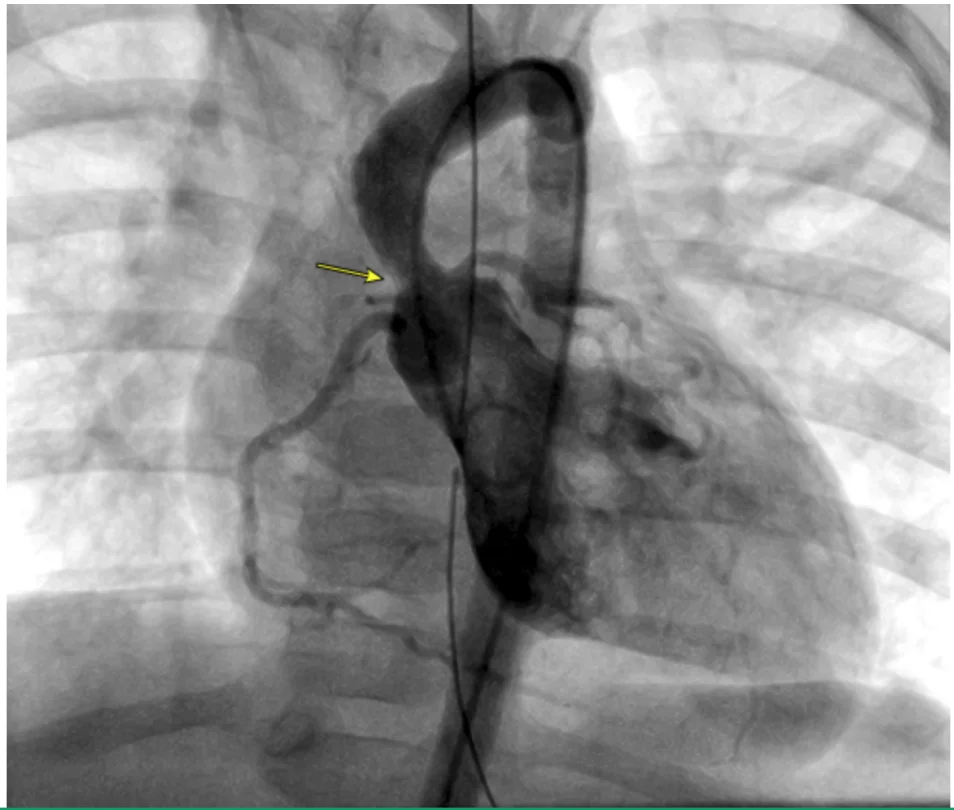
What this shows
It presents like valvular stenosis
with three differences.- The murmur is loudest at the first right intercostal space.
- A thrill in the suprasternal notch.
- Unequal arm blood pressures and unequal carotid pulses.
A 79-year-old has exertional syncope, a harsh late-peaking murmur at the second right intercostal space radiating to the carotids, and weak, delayed carotid pulses. Echo shows a valve area of 0.8 cm2. What is the treatment, and which drug class can make him hypotensive?
Severe symptomatic aortic stenosis needs aortic valve replacement; at over 80, transcatheter aortic valve replacement (TAVR) is the choice. Vasodilators (nitroglycerin) drop preload against the fixed obstruction and cause hypotension.
How it's tested
A 78-year-old with exertional syncope, a harsh late-peaking murmur radiating to the carotids and a weak delayed pulse: severe aortic stenosis — echocardiogram, then valve replacement; TAVR at his age.
Same findings in a 45-year-old with an ejection click: bicuspid aortic valve — surgical AVR; image the ascending aorta.
Severe AS with heart failure given nitroglycerin becomes hypotensive: vasodilators drop preload against a fixed obstruction — fluids, and get the valve replaced.
Asymptomatic severe AS, EF 45%: replace the valve — reduced EF is an indication even without symptoms.
Young patient with a murmur highest at the first right interspace, right-arm BP 30 mm Hg above the left, and a friendly elfin face: supravalvular AS of Williams syndrome.
Go deeper
Guidelines: 2020 ACC/AHA Valvular Heart Disease Guideline
Related Step 2 pages: Bicuspid Aortic Valve, Aortic Regurgitation, Hypertrophic Cardiomyopathy, Heart Sounds & Murmurs, Prosthetic Heart Valves, Approach to Syncope
High-yield images5
Flashcards for this page
Card 1 of 5 · try-out only, nothing is saved
You just read one page of 236
The rest of Step 2 CK, written exactly like this.
Rapid Review is the reading layer of a full Step 1 platform: a schedule fitted to your exam date, flashcards for every page, and a mentor a message away.
Every Step 1 system
Written the same way: what to know, how it’s tested, where to go deeper.
A plan built to your exam date
Tell us when you sit, and the schedule fits the whole library and your question bank to it.
Flashcards for every page
Ready-made spaced-repetition decks linked to each topic, so nothing you read gets forgotten.
