
Rapid Review·General Pathology
Select any text to highlight it or add a note.
NEOPLASIA
T2High yieldCommon Metastases
P219
Focus on
Metastases outnumber primaries in bone, liver, lung, and brain, and which primary seeds which site.
Key takeaways
How tumors travel
- Follicular thyroid carcinoma
- Choriocarcinoma
- Renal cell carcinoma
- Hepatocellular carcinoma
Metastasis or primary?
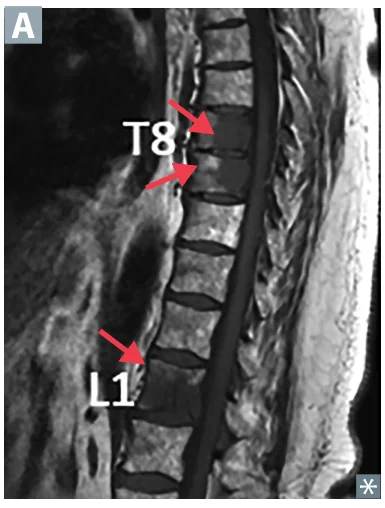
Two counting rules that decide most imaging questions
- Metastasis to bone, liver, lung, and brain is more common than a primary malignancy of those organs.
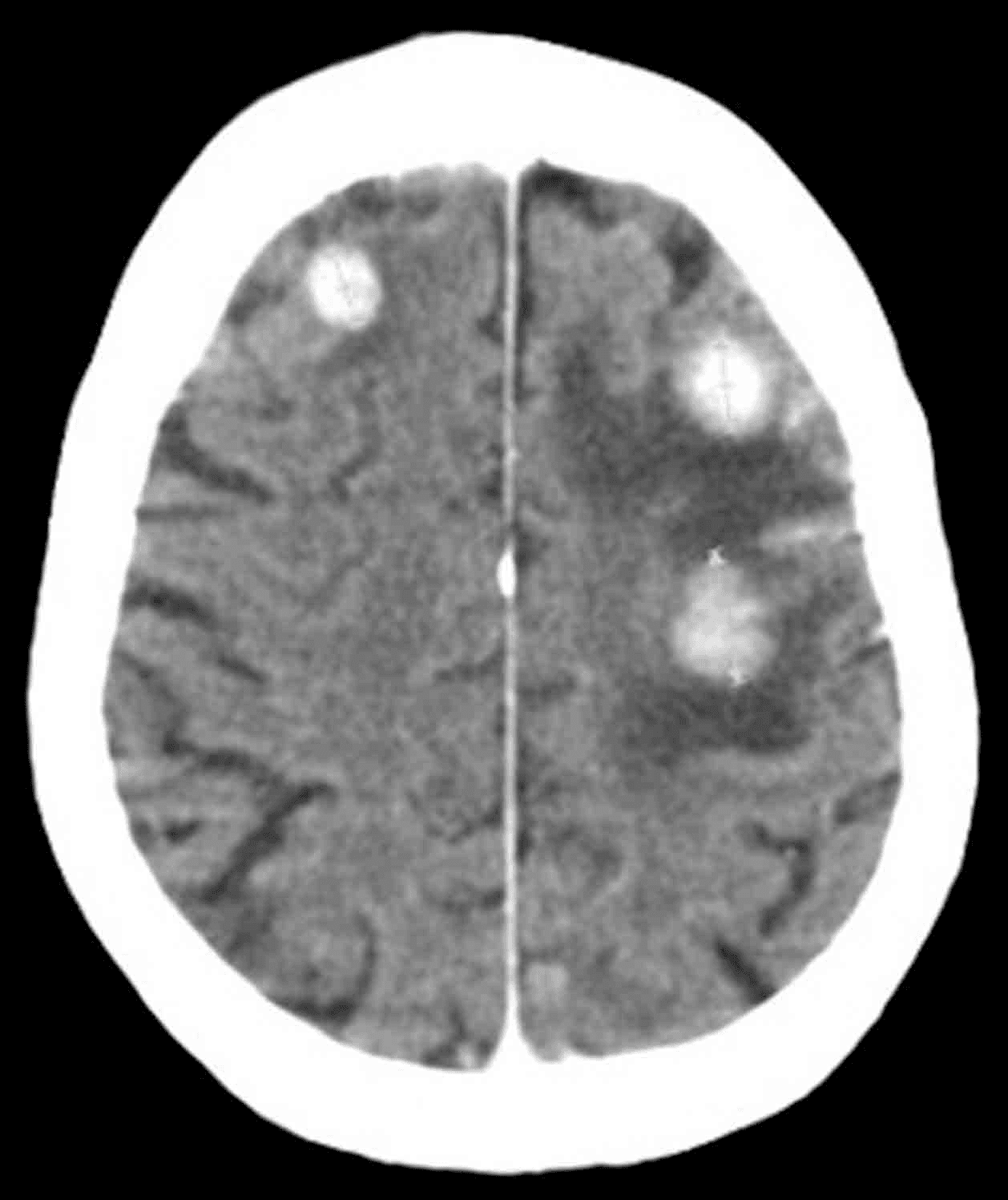
- Metastases appear as MULTIPLE lesions; primaries generally appear as a SOLITARY lesion.
The four favorite sites
| Site | Top Primaries | Key Notes |
|---|---|---|
| Bone | Prostate, breast >> lung > kidney, colon | Predilection for the axial skeleton. Blastic: prostate, small cell lung. Mixed: breast. Lytic: kidney, colon, non-small cell lung, thyroid |
| Liver | Colon > breast >> pancreas, lung, prostate | Scattered throughout the parenchyma |
| Lung | Colon, breast >> kidney, prostate | Typically involves both lungs |
| Brain | Lung > breast >> melanoma > colon, prostate | Classically at the gray-white matter junction |
Named patterns
Named metastatic patterns worth recognizing on sight
- Krukenberg tumor: gastric adenocarcinoma seeding the ovaries, with signet ring cells full of mucin.
- Choriocarcinoma heads for lung and brain.
- Ovarian cancer spreads by direct extension to the omentum, producing "omental caking."
- Testicular and ovarian tumors drain to para-aortic nodes, following embryologic descent rather than anatomic neighborhood.
A 68-year-old man has back pain, and imaging shows multiple sclerotic (blastic) lesions in his vertebrae. What is the most likely primary tumor?
Prostate cancer. Multiple lesions point to metastasis rather than a primary bone tumor, bone metastases favor the axial skeleton, and blastic lesions in a man are classically prostate.
How it's tested
The highest-yield single fact: prostate cancer produces OSTEOBLASTIC (sclerotic) bone metastases that light up on a bone scan and raise alkaline phosphatase with a normal serum calcium. Essentially every other cancer produces osteolytic lesions.
Expect a vignette of back pain plus neurologic deficits in a patient with known prostate, breast, or lung cancer, where the answer is epidural spinal cord compression from vertebral metastasis, an emergency requiring steroids and MRI.
And the solitary versus multiple ring-enhancing brain lesion distinction: multiple lesions at the gray-white junction are metastases, with lung the first primary to suspect.
Go deeper
First Aid "Metastasis to brain/liver/bone"; Pathoma Ch. 3. Anchor "mets outnumber primary tumors" for brain/liver/bone, the blastic (prostate) vs lytic (lung, RCC, myeloma) bone pattern, and the four carcinomas that spread hematogenously like sarcomas (RCC, HCC, follicular thyroid, choriocarcinoma).
High-yield images1
Flashcards for this page
Card 1 of 5 · try-out only, nothing is saved
(...)
You just read one page of 944
The rest of Step 1, written exactly like this.
Rapid Review is the reading layer of a full Step 1 platform: a schedule fitted to your exam date, flashcards for every page, and a mentor a message away.
Every Step 1 system
Written the same way: what to know, how it’s tested, where to go deeper.
A plan built to your exam date
Tell us when you sit, and the schedule fits the whole library and your question bank to it.
Flashcards for every page
Ready-made spaced-repetition decks linked to each topic, so nothing you read gets forgotten.
