
Rapid Review·Cardiovascular
Select any text to highlight it or add a note.
Heart Failure
T2High yieldAcute Decompensated Heart Failure
Focus on
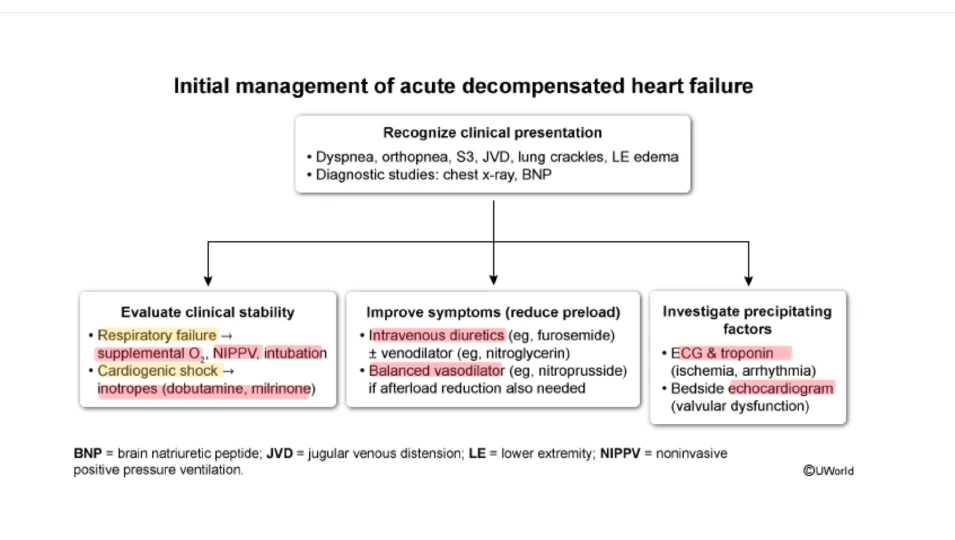
Acute worsening of known or new heart failure, usually triggered by missed medication. Decide stability first (respiratory failure gets positive-pressure ventilation, shock gets inotropes), decongest with an intravenous loop diuretic, add nitroglycerin when the diuretic is not enough or the patient is hypertensive, and find the trigger with an ECG, troponin and echo.
Key takeaways
What it is and what triggers it
Acute decompensated heart failure (ADHF)
acute worsening of new or pre-existing heart failure.Medication non-adherence
the most common cause of hospitalization; dietary indiscretion is the other everyday trigger.Other precipitants
infection, trauma or surgery, ischemia, and arrhythmias.Drugs
non-steroidal anti-inflammatory drugs (NSAIDs), negative inotropes such as non-dihydropyridine calcium-channel blockers, thiazolidinediones, and cocaine, alcohol or methamphetamine.Clinical features
Symptoms
acute dyspnea, orthopnea and paroxysmal nocturnal dyspnea, with progressive exercise intolerance and weight gain.Signs of distress
accessory muscle use, tachycardia, tachypnea, diffuse crackles, and sometimes wheeze (cardiac asthma).Signs of congestion
an S3, jugular venous distension and peripheral edema.Blood pressure
hypertension is common; hypotension means severe disease.Diagnosis
The diagnosis is clinical
dyspnea plus the examination, supported by tests.B-type natriuretic peptide (BNP) or N-terminal pro-BNP (NT-proBNP)
separates a heart failure exacerbation from other causes of dyspnea; a BNP over 400 makes heart failure likely.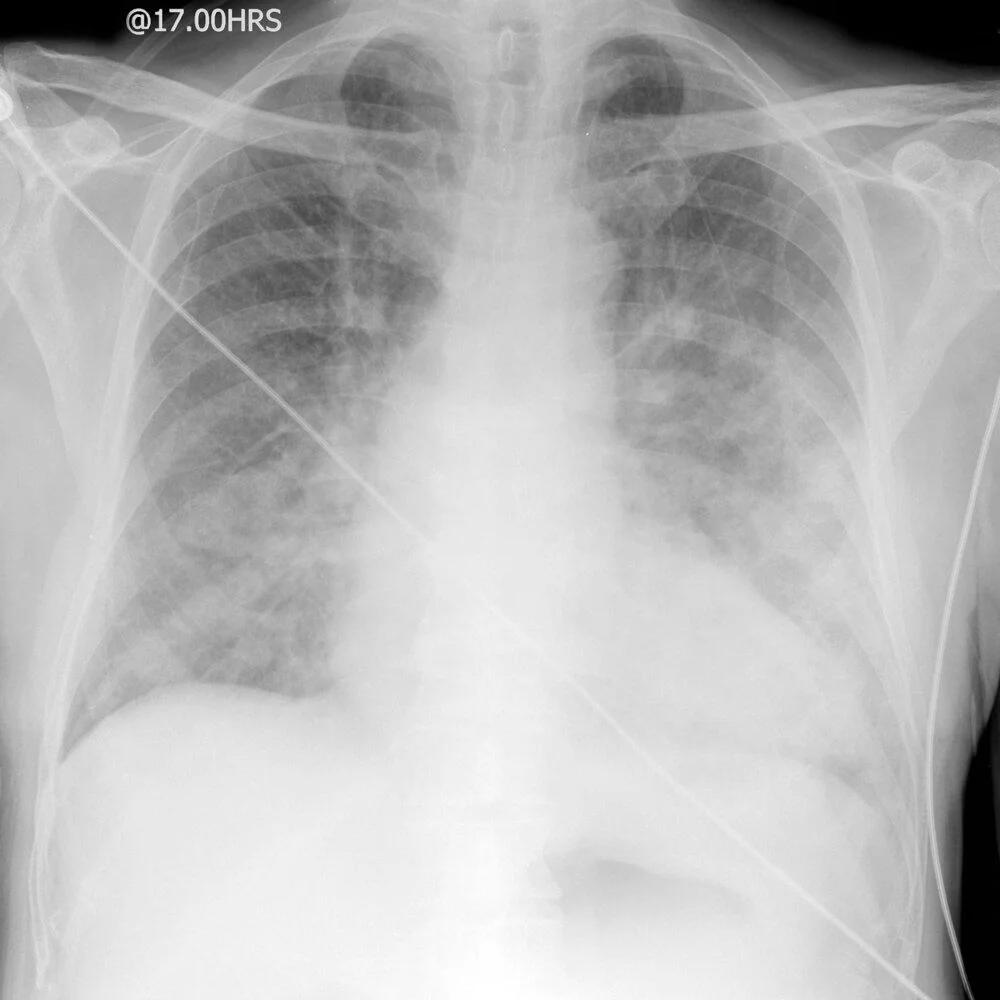
What this shows
Chest radiograph in cardiogenic pulmonary edema
the classic film.- Cardiomegaly or an enlarged heart shadow.
- Prominent pulmonary vessels with perihilar "bat wing" alveolar edema.
- Basal interstitial edema, Kerley B (septal) lines, and pleural effusions.
- Slowly progressive decompensation may show little or no pulmonary edema.
After stabilization
a transthoracic echocardiogram evaluates ventricular and valvular function when the cause is unclear.- Significant systolic dysfunction then gets a stress test or coronary angiography for ischemic cardiomyopathy.
Management: stability first
What this shows
Follow the pathway
stabilize, decongest, and find the cause in parallel.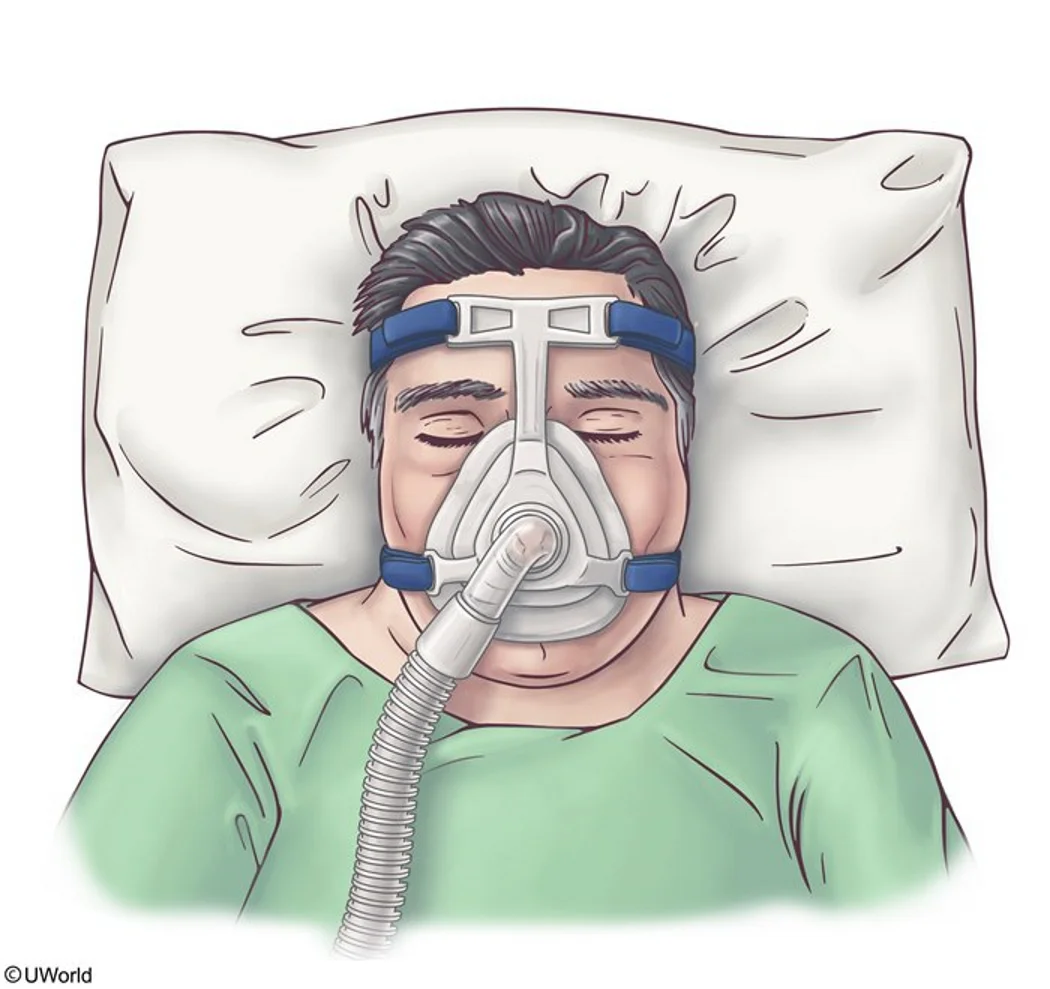
What this shows
Respiratory failure
supplemental oxygen with non-invasive positive-pressure ventilation (NIPPV) first.- Intubate if the patient worsens on it or is unconscious.
- Positive-pressure ventilation is a treatment in its own right for acute pulmonary edema, not just support.
Cardiogenic shock
systolic blood pressure under 90 mm Hg or end-organ hypoperfusion.- Wet and cold: respiratory support plus an inotrope (dobutamine or milrinone, norepinephrine if needed).
- Dry and cold: a fluid challenge first, then vasopressors and inotropes if refractory.
Management: relieve congestion, then the admission
First line is an intravenous (IV) loop diuretic
furosemide at about 2.5 times the home oral dose.- Monitor potassium, creatinine and blood pressure.
Add IV nitroglycerin
a venodilator that lowers preload and filling pressures, when the response to the diuretic is inadequate.Avoid vasodilators in a hypotensive patient
and reserve inotropes for cardiogenic shock.Investigate the cause
electrocardiogram (ECG) and troponin for ischemia or arrhythmia, then echocardiography.Start or continue a sodium-glucose cotransporter-2 (SGLT2) inhibitor
in every hemodynamically stable patient.Restart the beta blocker only after stabilization
at a low dose.A patient with known heart failure arrives with a blood pressure of 210/120, severe dyspnea and diffuse crackles after missing medications for a week. What is the first drug, and what supports breathing?
Flash pulmonary edema from a hypertensive emergency, so IV nitroglycerin comes first (before or instead of the loop diuretic), with NIPPV for respiratory failure; positive pressure itself treats the pulmonary edema. Missed medication is the most common trigger.
How it's tested
A man with known heart failure stops his furosemide, and arrives with orthopnea, crackles and a BNP of 900: acute decompensated heart failure from non-adherence; IV furosemide, then find out why he stopped.
Blood pressure 210/120, sudden respiratory distress and pink frothy sputum: flash pulmonary edema in a hypertensive emergency; non-invasive ventilation and IV nitroglycerin come first, with the diuretic.
Cool extremities, blood pressure 78/50, oliguria and pulmonary congestion: wet and cold cardiogenic shock; respiratory support and an inotrope (dobutamine or milrinone), not a vasodilator.
Decompensated patient on carvedilol asks when it restarts: after stabilization, at a low dose.
Go deeper
Related Step 2 pages: Heart Failure, Cardiogenic Shock
High-yield images3
You just read one page of 236
The rest of Step 2 CK, written exactly like this.
Rapid Review is the reading layer of a full Step 1 platform: a schedule fitted to your exam date, flashcards for every page, and a mentor a message away.
Every Step 1 system
Written the same way: what to know, how it’s tested, where to go deeper.
A plan built to your exam date
Tell us when you sit, and the schedule fits the whole library and your question bank to it.
Flashcards for every page
Ready-made spaced-repetition decks linked to each topic, so nothing you read gets forgotten.
