
Rapid Review·Cardiovascular
Select any text to highlight it or add a note.
Cardiac & Vascular Tumors
T3Take a glanceCardiac Tumors
Focus on
Metastases outnumber primaries; among primaries the atrial myxoma is the one to know — a pedunculated left atrial mass with constitutional symptoms (IL-6), emboli and a positional diastolic "tumor plop" that mimics mitral stenosis. Rhabdomyoma is the child's tumor and means tuberous sclerosis.
Key takeaways
Overview
Metastases are far more common than primary tumors
among primaries, about 75 percent are benign, and the atrial myxoma is the most common (75 percent of primaries).How any cardiac tumor presents
by obstruction (valve-like symptoms, syncope), embolism (stroke, limb ischemia) or arrhythmia.- Pericardial involvement gives effusion and tamponade.
Metastases
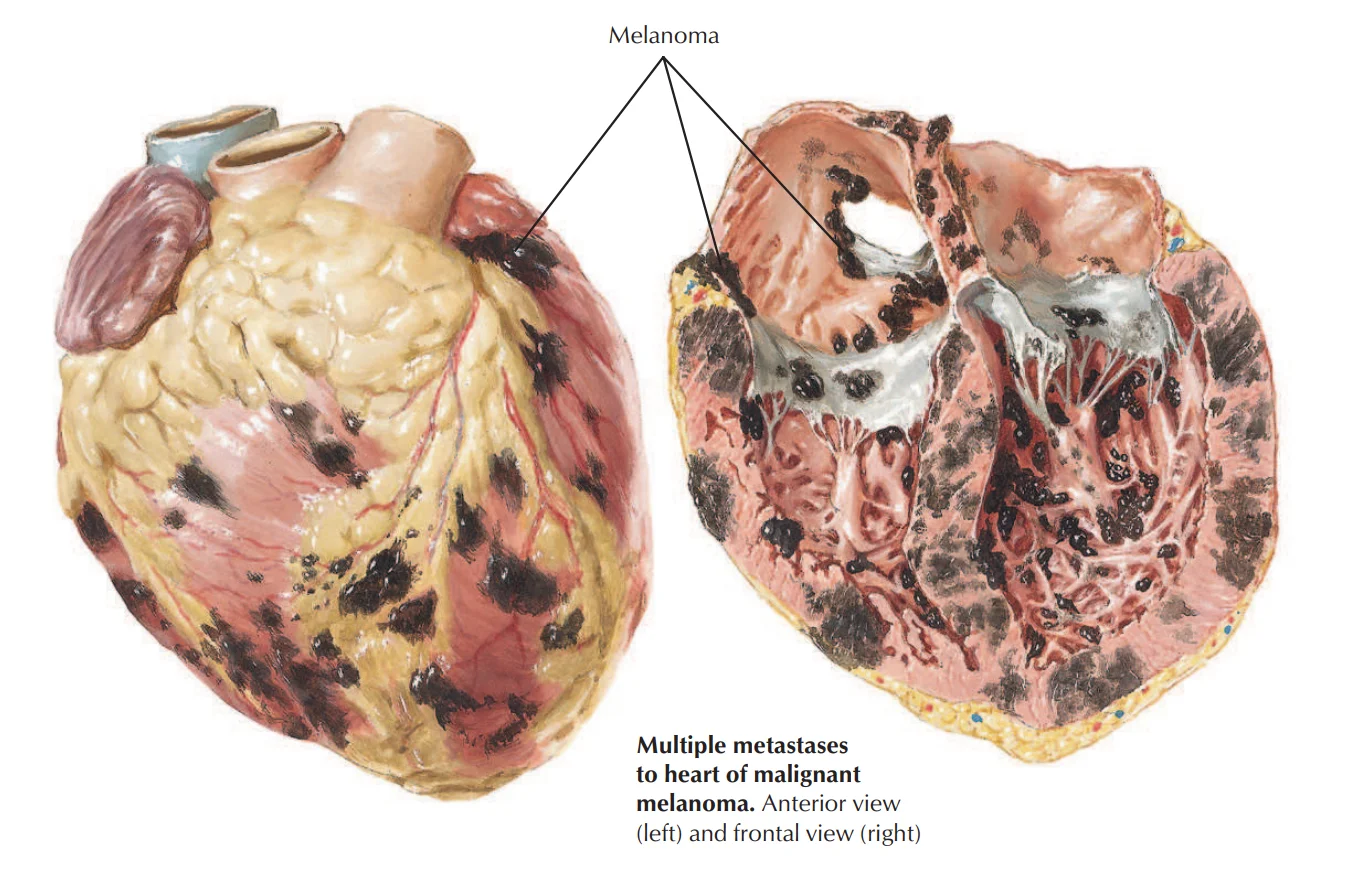
What this shows
Primary sites
melanoma (metastasizes nearly anywhere), lung, breast, soft-tissue tumors and hematologic malignancies.Where they land
usually pericardial or myocardial deposits with malignant effusion or tamponade.Management
drain, and treat the primary.Atrial myxoma
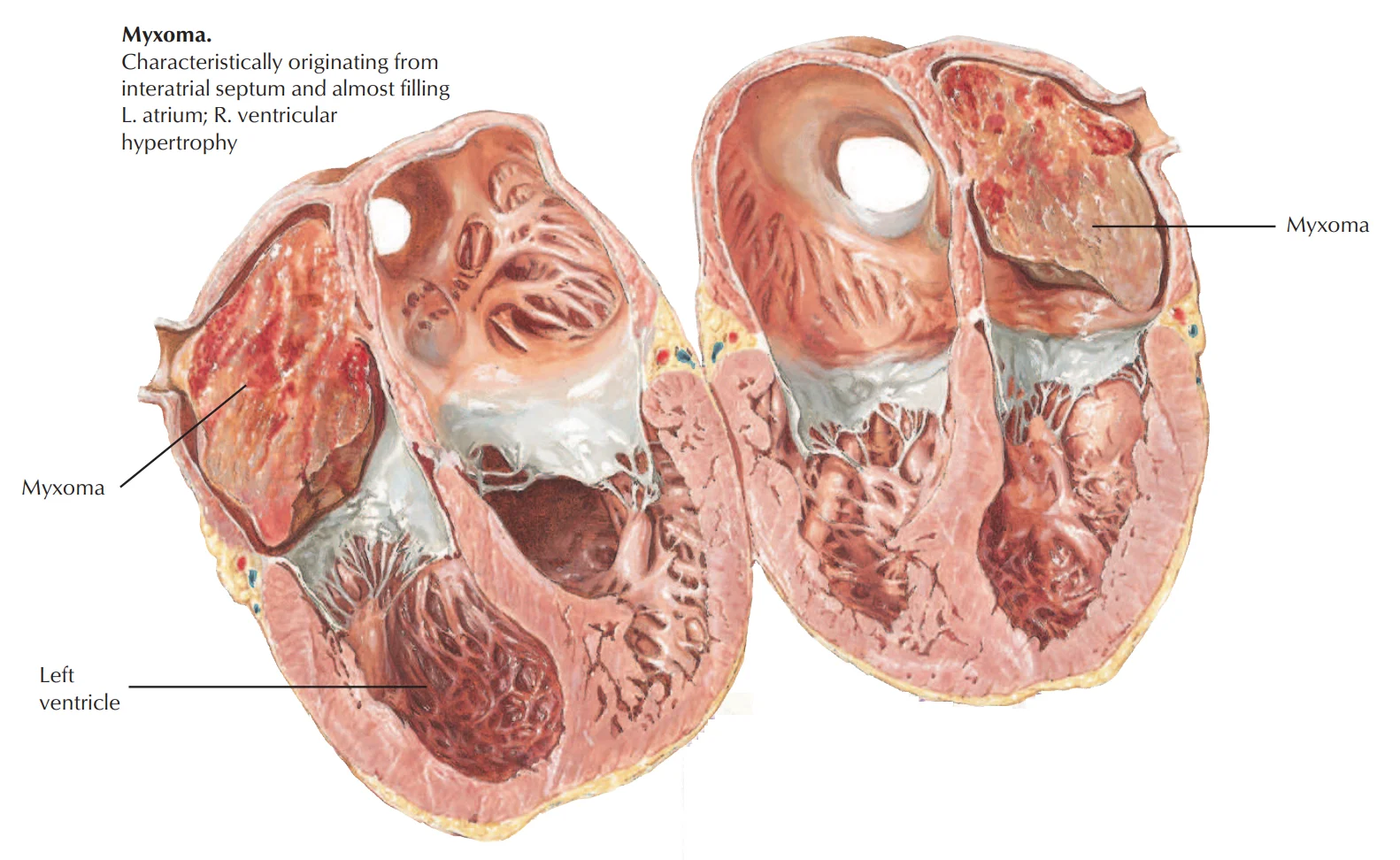
What this shows
Cardiovascular
chest pain, dyspnea, palpitations from mitral inflow obstruction, with a low-pitched diastolic "tumor plop" that is positional (improves lying down, worsens upright).Constitutional
fever and weight loss from the tumor's high interleukin-6 production, with anemia and a raised sedimentation rate.Embolization of fragments
stroke or arterial occlusion in a young person.
Diagnosis
transthoracic echocardiography first (a mobile pedunculated mass on the interatrial septum prolapsing through the mitral valve); histopathology after excision confirms it.Management
surgical excision, even if asymptomatic, because of the embolic and obstructive risk.Rhabdomyoma and the other tumors
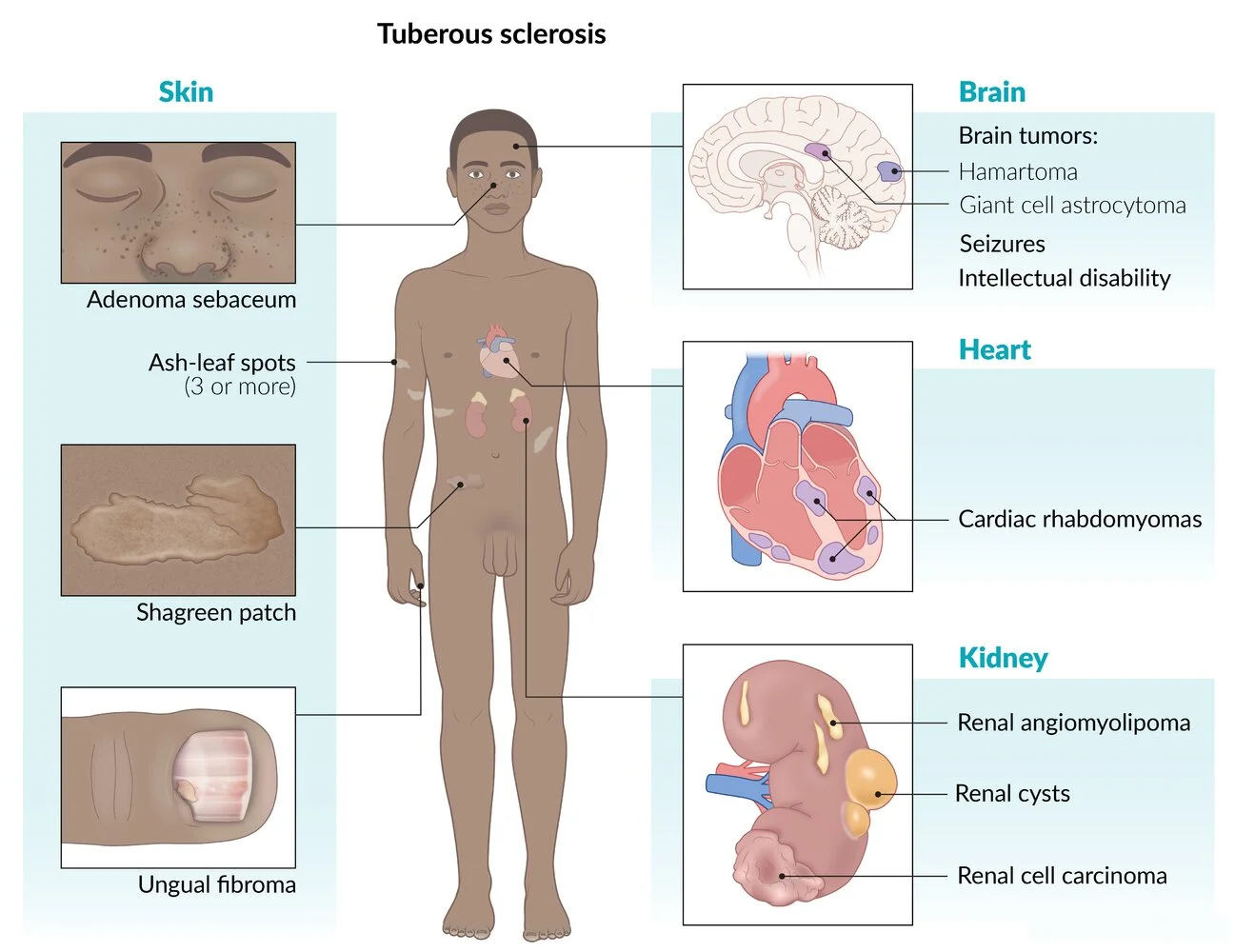
What this shows
Rhabdomyoma
the tumor of children, often multiple in the ventricular myocardium, and strongly associated with tuberous sclerosis (seizures, ash-leaf spots, angiofibromas).- Symptoms depend on size and location (outflow obstruction, arrhythmia).
- Diagnosed on echocardiography, and every child gets screened for tuberous sclerosis.
- Observation, because most regress; surgery only for obstruction or refractory arrhythmia.
| Tumor | Who | Where | Clues | Management |
|---|---|---|---|---|
| Atrial myxoma | Adults, women 30 to 60; familial in Carney complex | Left atrium, on the fossa ovalis by a stalk | Fever, weight loss (interleukin-6), emboli, positional diastolic plop, mitral-stenosis mimic | Surgical excision |
| Rhabdomyoma | Infants and children | Ventricular myocardium, often multiple | Tuberous sclerosis; outflow obstruction, arrhythmia; often regress | Observation; screen for tuberous sclerosis |
| Fibroma | Children | Ventricular septum, single | Arrhythmia, sudden death; Gorlin syndrome | Resection |
| Papillary fibroelastoma | Adults | Valves | Small "sea anemone" mass; embolic stroke | Excision |
| Angiosarcoma (most common primary malignant) | Adults, men 30 to 50 | Right atrium | Hemorrhagic effusion, tamponade, rapid growth | Resection, chemotherapy or radiation; poor prognosis (Angiosarcoma) |
| Metastases | Any cancer | Pericardium, myocardium | Melanoma, lung, breast, lymphoma | Drain, treat the primary |
A 42-year-old woman has fever, weight loss, a raised sedimentation rate, a recent transient ischemic attack, and a low-pitched diastolic sound that disappears when she lies down. What is the likely lesion, what drives her fever, and what is the treatment?
A left atrial myxoma: a positional tumor plop, emboli and constitutional symptoms from the tumor's high interleukin-6 production. Echocardiography first, then surgical excision even if asymptomatic; histopathology confirms it.
How it's tested
A 45-year-old woman with fever, weight loss, arthralgias, a raised ESR, a TIA, and a diastolic rumble that disappears when she lies down: left atrial myxoma — echocardiogram, then surgical excision.
What separates the murmur from mitral stenosis: it changes with position, there is a tumor plop instead of an opening snap, and the constitutional symptoms and emboli point to a mass.
A 2-year-old with infantile spasms, hypopigmented macules and a ventricular mass on echo: rhabdomyoma of tuberous sclerosis — observation; most regress.
A man with metastatic melanoma develops hypotension, JVD and electrical alternans: malignant pericardial effusion with tamponade — pericardiocentesis.
Go deeper
Related Step 2 pages: Angiosarcoma, Mitral Stenosis, Pericardial Effusion, Cardiac Tamponade, Approach to Syncope
High-yield images4
You just read one page of 236
The rest of Step 2 CK, written exactly like this.
Rapid Review is the reading layer of a full Step 1 platform: a schedule fitted to your exam date, flashcards for every page, and a mentor a message away.
Every Step 1 system
Written the same way: what to know, how it’s tested, where to go deeper.
A plan built to your exam date
Tell us when you sit, and the schedule fits the whole library and your question bank to it.
Flashcards for every page
Ready-made spaced-repetition decks linked to each topic, so nothing you read gets forgotten.
