
Rapid Review·Cardiovascular
Select any text to highlight it or add a note.
Shock
T1Must knowDistributive Shock
Focus on
Warm, flushed and hypotensive: the vessels have opened and the output is high but the pressure is gone. Sepsis is the big one — cultures, antibiotics within the hour, 30 mL/kg, then norepinephrine to a MAP of 65, vasopressin second, hydrocortisone if still refractory. Neurogenic shock is the bradycardic exception; anaphylaxis gets epinephrine (Anaphylactic Shock).
Key takeaways
What it is and what causes it
Distributive shock
profound vasodilation and capillary leak lower systemic vascular resistance.- Cardiac output rises to compensate (the warm, hyperdynamic phase) until myocardial depression and leak bring it down (the cold, late phase).
Filling pressures
low or normal.Mixed venous oxygen saturation is high
because the tissues cannot extract oxygen (blood rushes through the capillaries too fast).Septic shock (most common)
infection with organ dysfunction and a vasopressor requirement to keep the mean arterial pressure (MAP) at 65 or more, with lactate over 2 despite fluids.Other causes
anaphylaxis (Anaphylactic Shock); neurogenic shock (cervical or upper thoracic cord injury, spinal anesthesia; loss of sympathetic tone); adrenal crisis (steroid withdrawal, Addison disease); toxic shock syndrome (staphylococcal or streptococcal superantigens).Clinical features and diagnosis
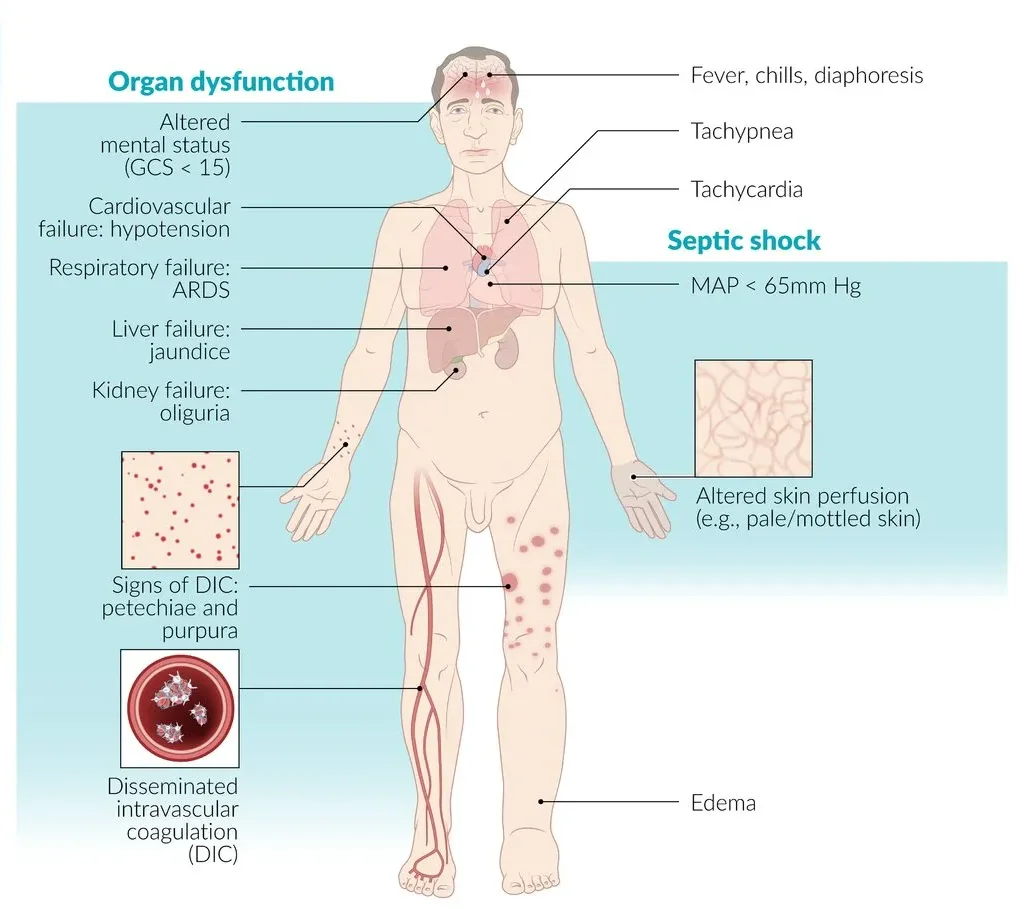
What this shows
Early
warm flushed skin, bounding pulses, wide pulse pressure, rapid capillary refill; tachycardia (except neurogenic), fever or hypothermia, tachypnea, altered mentation, oliguria.Late
cold extremities as output falls.Plus the cause
an infection source, a rash (toxic shock, meningococcemia), urticaria and wheeze, cord injury with paralysis, hyperpigmentation and hyponatremia (Addison).Tests
the clinical picture plus lactate, cultures (blood twice, urine, sputum, wounds; before antibiotics if that costs no time), blood count, procalcitonin, renal and liver function, coagulation, blood gas, source imaging.- A high lactate strongly predicts a poor outcome.
Adrenal crisis suspected
cortisol or corticotropin stimulation (treat first).Echocardiography
a hyperdynamic under-filled left ventricle (septic cardiomyopathy in some).| Septic | Neurogenic | Anaphylactic Shock | |
|---|---|---|---|
| Setting | Infection, organ dysfunction | Cord injury above T6, spinal anesthesia | Allergen exposure within minutes |
| Heart rate | Tachycardia | Bradycardia (unopposed vagal tone) | Tachycardia |
| Skin | Warm, flushed, then mottled | Warm, dry, flaccid paralysis below the level | Urticaria, angioedema, flushing |
| Other | Fever, source, high lactate | Priapism, absent reflexes, hypothermia | Wheeze, stridor, gastrointestinal symptoms |
| First drug after fluids | Norepinephrine | Norepinephrine (atropine or phenylephrine as needed) | Intramuscular epinephrine, before fluids |
| Do not confuse with | Cardiogenic (cold, distended neck veins) | Spinal shock (a neurologic term: areflexia, not hypotension); hemorrhage (tachycardic) | Vasovagal |
Sepsis
Sepsis
life-threatening organ dysfunction from a dysregulated immune response to infection.Source and organism
pneumonia is the most common source; gram-positive bacteria are the most common organisms.Risk factors
extremes of age (under 1 or over 75), intensive care, comorbidities.Atypical patients
neonates, the elderly and the immunocompromised may have no fever, or even hypothermia.A leading cause of ARDS
sepsis is one of the commonest causes of acute respiratory distress syndrome (ARDS).Systemic inflammatory response syndrome (SIRS)
consider sepsis with 2 or more of these plus a suspected infection.- Temperature over 38 C or under 36 C.
- Heart rate over 90.
- Respiratory rate over 20, or an arterial carbon dioxide under 32 mm Hg.
- White cells over 12,000 or under 4,000 per mm3, or over 10 percent bands.
Septic shock: the first-hour bundle
Lactate
measure it (repeat if over 2).Blood cultures
two sets (aerobic and anaerobic) before antibiotics.Broad-spectrum intravenous antibiotics
every hour of delay raises mortality; cover gram-positive and gram-negative organisms (vancomycin plus piperacillin-tazobactam is a common regimen).Fluids
30 mL/kg balanced crystalloid for hypotension or lactate of 4 or more.Vasopressors if MAP stays under 65
during or after fluid.Norepinephrine first
through a peripheral line if a central line would delay it.- Add vasopressin at moderate norepinephrine doses, then epinephrine; dobutamine for persistent hypoperfusion with low output.
- Dopamine is not used (Vasopressors & Inotropes).
Hydrocortisone 200 mg/day
for shock needing escalating vasopressors (relative adrenal insufficiency).Source control within 6 to 12 hours
drain the abscess, remove the infected line or device, debride, relieve the obstruction.Targets
MAP of 65 or more, urine output of 0.5 mL/kg/h or more, lactate clearance, capillary refill under 3 seconds.- Reassess fluid responsiveness dynamically rather than pouring in more.
Neurogenic shock, other causes and complications
Neurogenic shock
spine immobilization and pain control; fluids first (a trauma patient may also be bleeding).- Then norepinephrine (alpha plus beta, so it covers the bradycardia), or phenylephrine plus atropine or pacing for bradycardia.
- Target MAP 85 to 90 for the first 7 days to perfuse the injured cord; it usually resolves in 1 to 3 weeks.
- High-dose steroids are no longer recommended for cord injury.
Adrenal crisis
intravenous hydrocortisone 100 mg and dextrose-saline immediately, before results.Toxic shock
fluids, pressors, remove the tampon or pack, clindamycin plus a beta-lactam or vancomycin.Overdose
antidotes and pressors.Complications
acute respiratory distress syndrome, kidney injury, disseminated intravascular coagulation, limb ischemia from high-dose vasopressors, multi-organ failure.An elderly woman with pneumonia is confused, warm and flushed with a MAP of 58 and a lactate of 5. List the first-hour steps, and what follows if her MAP stays under 65 after 30 mL/kg of fluid?
Septic shock: measure lactate, draw two sets of blood cultures, give broad-spectrum antibiotics within the hour, and 30 mL/kg balanced crystalloid. If the MAP stays under 65, start norepinephrine, then add vasopressin; hydrocortisone if the vasopressor need keeps rising; and control the source.
How it's tested
Pyelonephritis with fever, warm extremities, BP 78/40 and lactate 5 after 2 L of crystalloid: septic shock — norepinephrine to MAP 65, antibiotics already running, source control.
Still on rising norepinephrine plus vasopressin: add hydrocortisone 200 mg/day.
A cervical spine fracture with BP 80/50, heart rate 48, warm dry legs and flaccid paralysis: neurogenic shock — fluids, then norepinephrine; keep MAP 85–90; and check for bleeding elsewhere first.
Hypotension, hyperkalemia, hyponatremia and hyperpigmentation in a patient who stopped prednisone: adrenal crisis — IV hydrocortisone now.
Which pressor is first line in septic shock and why not dopamine: norepinephrine — dopamine causes more arrhythmias and deaths.
Go deeper
Guidelines: 2026 Surviving Sepsis Campaign Adult Guidelines
Related Step 2 pages: Approach to Shock, Anaphylactic Shock, Approach to Fluid Replacement, Vasopressors & Inotropes, Cardiogenic Shock, Catheter-Related Bloodstream Infection
High-yield images1
You just read one page of 236
The rest of Step 2 CK, written exactly like this.
Rapid Review is the reading layer of a full Step 1 platform: a schedule fitted to your exam date, flashcards for every page, and a mentor a message away.
Every Step 1 system
Written the same way: what to know, how it’s tested, where to go deeper.
A plan built to your exam date
Tell us when you sit, and the schedule fits the whole library and your question bank to it.
Flashcards for every page
Ready-made spaced-repetition decks linked to each topic, so nothing you read gets forgotten.
