
Rapid Review·Cardiovascular
Select any text to highlight it or add a note.
Inflammatory & Infective Disease
T1Must knowInfective Endocarditis
Focus on
Fever plus a new regurgitant murmur (or unexplained bacteremia) is endocarditis until proven otherwise: three blood cultures before antibiotics, echo (TEE when TTE is negative or a prosthetic valve is involved), Duke criteria, 4–6 weeks of IV antibiotics matched to the organism, and surgery for heart failure, abscess or block, prosthetic valves, big vegetations or persistent bacteremia. Know the organism-by-risk-factor table and who gets dental prophylaxis.
Key takeaways
What it is and who gets it
Infective endocarditis
infection of the endocardial surface, usually a valve.- Mitral most often, then aortic, and tricuspid in intravenous drug use.
Acute endocarditis
Staphylococcus aureus on a healthy native valve, with rapid, fulminant progression.Subacute endocarditis
viridans streptococci on a previously damaged or congenitally abnormal valve, with slow progression.Cardiac risk factors
prosthetic valves and devices, valvular disease, congenital heart disease.Non-cardiac risk factors
intravenous drug use (especially non-sterile), intravascular devices and chronic hemodialysis, poor dentition and dental procedures.| Organism | Risk factor |
|---|---|
| Viridans streptococci | Dental procedures |
| Streptococcus gallolyticus (S. bovis) | Colon cancer |
| Enterococcus | Gastrointestinal or genitourinary procedures |
| Staphylococcus epidermidis, Staphylococcus aureus | Prosthetic valves |
| Staphylococcus aureus, Pseudomonas, Candida | Intravenous drug use |
| Staphylococcus aureus, S. epidermidis, Candida | Intravascular catheters |
| Coxiella (animal exposure), Bartonella, HACEK (Haemophilus, Aggregatibacter, Cardiobacterium, Eikenella, Kingella) | Culture-negative endocarditis |
Clinical features
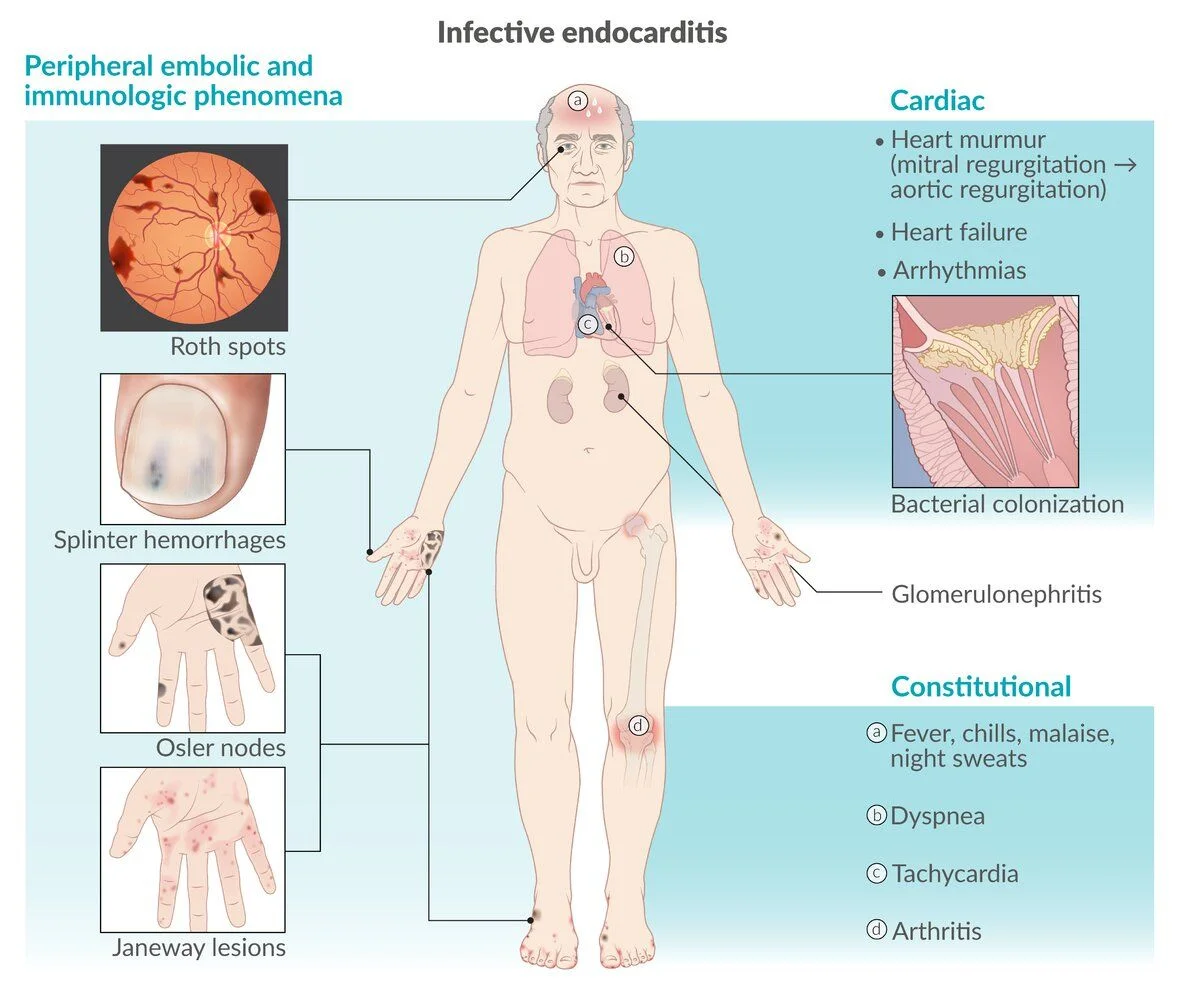
What this shows
Constitutional
fever, weight loss, night sweats, arthralgia.A new regurgitant murmur
mitral most common, then tricuspid and aortic.High-risk findings
two.- Heart failure from valve insufficiency.
- A new conduction defect (heart block), which means a perivalvular abscess, usually sub-aortic.
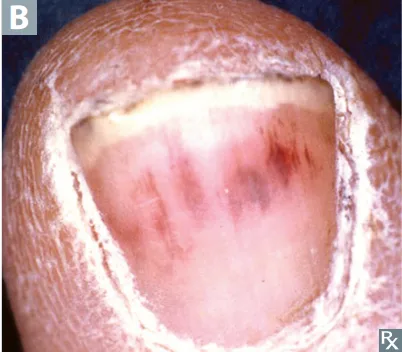
What this shows
Vascular phenomena (emboli)
acute kidney injury, splenomegaly or splenic infarct, septic stroke, mycotic aneurysm, petechiae, splinter hemorrhages, and Janeway lesions (non-tender macules on the palms and soles).Right-sided endocarditis embolizes to the lung
septic pulmonary emboli, as in the Septic pulmonary emboli in right-sided IE.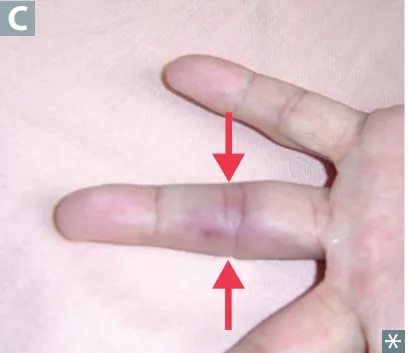
What this shows
Immunologic phenomena (immune complexes)
Osler nodes (tender nodules on fingers and toes), Roth spots (retinal hemorrhages with pale centers, as in the Roth spots), and glomerulonephritis.Diagnosis
Three sets of blood cultures
before any antibiotic.Empiric therapy
start it once the cultures are drawn.Transthoracic echocardiography (TTE)
first.Transesophageal echocardiography (TEE)
when the TTE is negative but cultures are positive, and for suspected prosthetic valve endocarditis, which TTE detects poorly.| Level | Requirement |
|---|---|
| Definite | 2 major, or 1 major + 3 minor, or 5 minor |
| Possible | 1 major + 1 minor, or 3 minor |
| Major | Multiple positive blood cultures with a typical organism; echocardiographic vegetation, abscess or new prosthetic dehiscence; a new regurgitant murmur |
| Minor | Predisposition (intravenous drug use or valve disease); fever of 38 degrees or higher; vascular phenomena (arterial embolus, septic pulmonary embolus, mycotic aneurysm, intracranial bleed, conjunctival hemorrhage, Janeway lesions); immunologic phenomena (glomerulonephritis, Osler nodes, Roth spots, rheumatoid factor); atypical positive cultures |
Management
Acute endocarditis
immediate empiric intravenous vancomycin after the cultures, then a targeted regimen; 4 to 6 weeks in total.Subacute endocarditis
wait for the cultures, then treat to the organism.Prosthetic valve endocarditis
urgent surgery plus vancomycin, rifampin and gentamicin.| Organism | Antibiotic |
|---|---|
| Methicillin-sensitive Staphylococcus aureus | Nafcillin or oxacillin |
| Methicillin-resistant Staphylococcus aureus | Vancomycin |
| Viridans streptococci | Penicillin G |
| Enterococci | Ampicillin plus gentamicin |
| HACEK | Ceftriaxone |
Urgent surgery
six indications.- Acute heart failure.
- Extension of infection (perivalvular abscess, fistula, heart block).
- Prosthetic valve endocarditis.
- Large (over 1 cm) or recurrent vegetations.
- Persistent bacteremia.
- Hard-to-treat organisms (fungi, multidrug-resistant bacteria).
Complications
heart failure is the most common cause of death.Prophylaxis
The rule
a high-risk patient plus a high-risk procedure.High-risk patients
five groups.- A prosthetic valve.
- Prior endocarditis.
- Unrepaired cyanotic congenital heart disease.
- Repaired congenital disease with a residual defect.
- A valve abnormality in a transplanted heart.
High-risk procedures and the drug for each
three settings.- Gingival or apical tooth manipulation (extraction) and incision of respiratory mucosa: amoxicillin.
- Surgery on infected skin or muscle: vancomycin.
- Gastrointestinal or genitourinary procedures, only with active infection: ampicillin.
Timing
a single dose 30 to 60 minutes before the procedure.Penicillin allergy
cephalexin, azithromycin or doxycycline.An injection drug user has fever, cough and several cavitating nodules at the lung periphery. Which valve and organism are most likely, and what must be done before the first antibiotic dose?
Right-sided (tricuspid) endocarditis with septic pulmonary emboli, usually Staphylococcus aureus. Draw three sets of blood cultures before any antibiotic (antibiotics cause false-negative cultures), then start empiric intravenous vancomycin and get a TTE.
How it's tested
Fever for three weeks, a new apical holosystolic murmur, splinter hemorrhages and microscopic hematuria in a man with bad teeth: subacute endocarditis — three blood cultures before antibiotics, then echo; expect viridans streptococci.
Injection drug user with fever, cough and multiple cavitating peripheral lung nodules, no murmur: tricuspid S. aureus endocarditis with septic pulmonary emboli — cultures, TTE (good for the tricuspid valve), nafcillin or vancomycin.
Endocarditis with a new first-degree block progressing to complete block: aortic root abscess — TEE and urgent surgery.
Enterococcal endocarditis in a 70-year-old man; which additional evaluation: colonoscopy is for S. gallolyticus; for enterococcus look for a GU source — and remember S. bovis means colon cancer.
Prosthetic mitral valve patient scheduled for a tooth extraction: amoxicillin 2 g one hour before; a patient with mitral valve prolapse alone gets nothing.
Persistent bacteremia after 7 days of appropriate antibiotics with a 15 mm mobile mitral vegetation: surgery.
Go deeper
Guidelines: 2023 ESC Endocarditis Guideline · 2021 AHA Prevention of Viridans Group Streptococcal Endocarditis Statement
Related Step 2 pages: Nonbacterial Thrombotic Endocarditis, Mitral Regurgitation, Aortic Regurgitation, Tricuspid Regurgitation, Prosthetic Heart Valves, Atrioventricular Block, Catheter-Related Bloodstream Infection
High-yield images5
Flashcards for this page
Card 1 of 5 · try-out only, nothing is saved
You just read one page of 236
The rest of Step 2 CK, written exactly like this.
Rapid Review is the reading layer of a full Step 1 platform: a schedule fitted to your exam date, flashcards for every page, and a mentor a message away.
Every Step 1 system
Written the same way: what to know, how it’s tested, where to go deeper.
A plan built to your exam date
Tell us when you sit, and the schedule fits the whole library and your question bank to it.
Flashcards for every page
Ready-made spaced-repetition decks linked to each topic, so nothing you read gets forgotten.
