Rapid Review·Cardiovascular
Select any text to highlight it or add a note.
Arrhythmias: Bradycardia & Devices
T1Must knowBeta-Blocker Toxicity
Focus on
Bradycardia, hypotension and AV block after an overdose — plus bronchospasm and hypoglycemia with a non-selective agent, seizures with propranolol. Fluids and atropine first, then glucagon (the specific antidote, raising cAMP around the blocked receptor), high-dose insulin for refractory shock, and pacing. Calcium-channel-blocker overdose looks the same but keeps the glucose high and gets calcium first.
Key takeaways
Mechanism and clinical features
Mechanism
excess adrenergic blockade lowers intracellular cyclic adenosine monophosphate (cyclic AMP).Beta-1 blockade
bradycardia and hypotension, with confusion from cerebral hypoperfusion.Beta-2 blockade
bronchospasm and hypoglycemia (impaired gluconeogenesis and glycogenolysis), with confusion and seizures from the low glucose.Selective vs non-selective
cardioselective drugs (metoprolol) give mainly the beta-1 effects; non-selective drugs (propranolol) give all of them.- Lipid-soluble propranolol also causes confusion and seizures directly in the brain.
Diagnosis
Clinical
drug levels are not useful.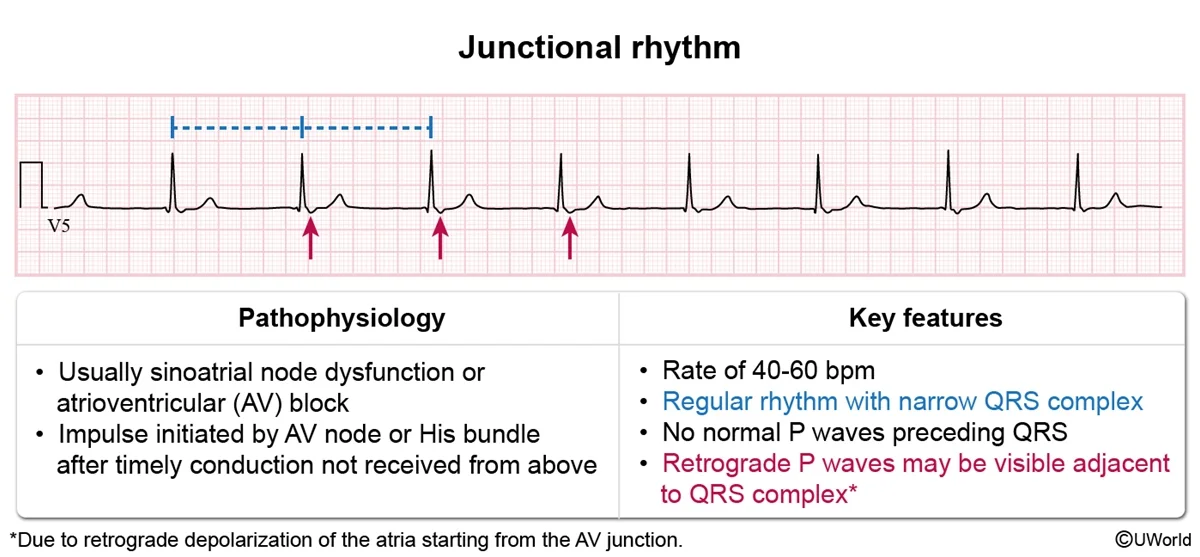
What this shows
Electrocardiogram (ECG)
sinus bradycardia or sinus arrest, and atrioventricular block.Management
First line
intravenous fluids for hypotension and atropine for bradycardia.Glucagon
directly reverses the toxicity by raising cyclic AMP (the alternative when atropine fails or is unavailable).Calcium gluconate
sometimes raises the blood pressure.After an overdose of propranolol, a patient has a heart rate of 40, hypotension, wheezing and a glucose of 45. Which effects come from beta-1 and beta-2 blockade, and which drug reverses the toxicity when atropine fails?
Beta-1: bradycardia and hypotension. Beta-2: bronchospasm and hypoglycemia (propranolol is non-selective). First line is IV fluids and atropine; glucagon reverses the toxicity by raising cyclic AMP.
How it's tested
A 45-year-old found drowsy after taking a bottle of propranolol: heart rate 38, BP 70/40, glucose 45 mg/dL, then a seizure: beta-blocker toxicity — dextrose, benzodiazepine, fluids and atropine, then IV glucagon; high-dose insulin if still shocked.
Which antidote and why: glucagon — it raises cAMP through its own receptor, bypassing the blocked beta receptor.
Bradycardic, hypotensive overdose with a glucose of 280 mg/dL: calcium-channel blocker, not beta-blocker — IV calcium first, then high-dose insulin.
Persistent hypotension despite atropine, glucagon and pressors: high-dose insulin–euglycemia therapy; ECMO if refractory.
Overdose of sotalol with a QTc of 600 and polymorphic VT: torsades — magnesium and overdrive pacing.
Go deeper
Related Step 2 pages: Sinus Bradycardia, Atrioventricular Block, Digoxin Toxicity, Antihypertensive Drugs, Approach to Shock
High-yield images1
You just read one page of 236
The rest of Step 2 CK, written exactly like this.
Rapid Review is the reading layer of a full Step 1 platform: a schedule fitted to your exam date, flashcards for every page, and a mentor a message away.
Every Step 1 system
Written the same way: what to know, how it’s tested, where to go deeper.
A plan built to your exam date
Tell us when you sit, and the schedule fits the whole library and your question bank to it.
Flashcards for every page
Ready-made spaced-repetition decks linked to each topic, so nothing you read gets forgotten.
