
Rapid Review·Cardiovascular
Select any text to highlight it or add a note.
Vascular: Aorta & Carotid
T2High yieldCarotid Artery Stenosis
Focus on
Atherosclerosis at the carotid bifurcation causing TIA, stroke or amaurosis fugax. Duplex ultrasound first. Everyone gets aspirin, a statin and risk-factor control; endarterectomy within two weeks for symptomatic 70–99% stenosis, considered at 50–69%, never for a complete occlusion. Asymptomatic disease is mostly medical, with surgery only for tight stenosis in a fit patient.
Key takeaways
What it is
Carotid artery stenosis
atherosclerotic stenosis at the carotid bifurcation and proximal internal carotid artery.How it causes events
thrombus at the plaque, by embolization (most) or a low-flow state.Symptomatic vs asymptomatic
symptomatic means a stroke, transient ischemic attack (TIA) or amaurosis fugax in the past 6 months; everything else is asymptomatic.- This distinction drives every management decision.
Clinical features and diagnosis
Anterior-circulation TIA or stroke
middle cerebral artery (contralateral face and arm weakness, aphasia, neglect) or anterior cerebral artery (contralateral leg weakness).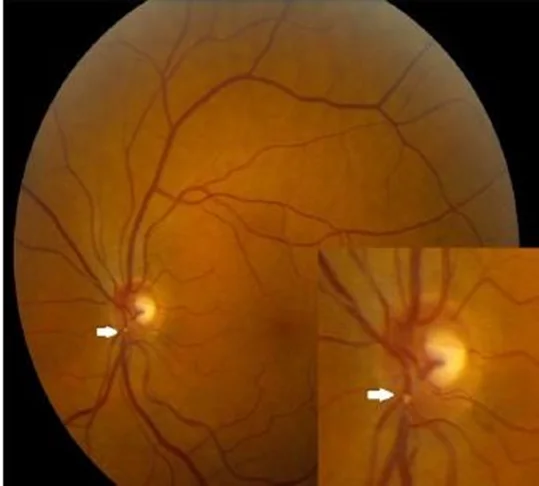
What this shows
Amaurosis fugax
transient painless monocular blindness from retinal emboli.- Hollenhorst plaques are cholesterol emboli in the retinal arterioles (rare but specific).
A carotid bruit
insensitive and non-specific; an asymptomatic bruit needs risk-factor control, not a workup.Not carotid
vertigo, syncope, drop attacks and bilateral symptoms (Vertebrobasilar Insufficiency).Carotid duplex ultrasound is first-line
the least invasive test; magnetic resonance (MR) angiography or computed tomography (CT) angiography to confirm the degree and plan intervention.No screening
screening asymptomatic adults with ultrasound is not recommended, even with a bruit.| Stenosis | Symptomatic (event within 6 months) | Asymptomatic |
|---|---|---|
| Under 50 percent | Medical therapy only | Medical therapy; periodic (annual) duplex surveillance |
| 50 to 69 percent | Medical therapy for all; endarterectomy considered only with a reasonable life expectancy | Medical therapy; annual duplex |
| 70 to 99 percent | Carotid endarterectomy, ideally 3 to 14 days after the event; stenting if surgical risk is high or the lesion is not accessible | Medical therapy; endarterectomy for 80 to 99 percent if low surgical risk and long life expectancy |
| 100 percent (occlusion) | Medical therapy only (nothing to revascularize) | Medical therapy |
Management
Medical therapy for everyone
lifestyle modification (diet, exercise, smoking cessation), low-dose aspirin, a high-intensity statin, blood pressure control, diabetes control.- Anticoagulation is not indicated for carotid stenosis itself.
Carotid endarterectomy
the standard; never for occlusion, and only where the peri-operative stroke and death rate is low.Carotid stenting
for high surgical risk (prior neck surgery or radiation, contralateral occlusion, high lesions, severe cardiopulmonary disease); higher peri-procedural stroke risk than surgery in the elderly.Prognosis
stroke risk is highest in the first weeks after a symptomatic event (hence the 2-week window); overall mortality is dominated by coronary disease.A 68-year-old had 20 minutes of right arm weakness and aphasia last week; duplex shows 80 percent stenosis of the left internal carotid. What is the treatment and its ideal timing, and what if the artery were 100 percent occluded?
Symptomatic 70 to 99 percent stenosis: carotid endarterectomy, ideally 3 to 14 days after the event, plus aspirin, a high-intensity statin and risk-factor control. A complete occlusion gets medical therapy only.
How it's tested
A 68-year-old smoker with transient right arm weakness and slurred speech two days ago; duplex shows 80% left internal carotid stenosis: symptomatic high-grade stenosis — carotid endarterectomy within two weeks, plus aspirin and a statin.
Same patient with a 100% occlusion: medical therapy only.
An asymptomatic 75-year-old with a bruit and 60% stenosis: aspirin, statin, risk-factor control and annual duplex — no surgery.
Amaurosis fugax with a bright refractile plaque at a retinal bifurcation: Hollenhorst plaque — carotid duplex.
Hoarseness and a tongue deviating toward the operated side after endarterectomy: recurrent laryngeal and hypoglossal nerve injury.
Symptomatic 85% stenosis in a patient who had a radical neck dissection and radiation: carotid stenting — a hostile surgical neck.
Go deeper
Guidelines: 2021 AHA/ASA Secondary Stroke Prevention Guideline
Related Step 2 pages: Carotid Artery Dissection, Vertebrobasilar Insufficiency, Peripheral Artery Disease, Hyperlipidemia, Cholesterol Embolism Syndrome
High-yield images1
Flashcards for this page
Card 1 of 2 · try-out only, nothing is saved
You just read one page of 236
The rest of Step 2 CK, written exactly like this.
Rapid Review is the reading layer of a full Step 1 platform: a schedule fitted to your exam date, flashcards for every page, and a mentor a message away.
Every Step 1 system
Written the same way: what to know, how it’s tested, where to go deeper.
A plan built to your exam date
Tell us when you sit, and the schedule fits the whole library and your question bank to it.
Flashcards for every page
Ready-made spaced-repetition decks linked to each topic, so nothing you read gets forgotten.
