
Rapid Review·Cardiovascular
Select any text to highlight it or add a note.
Coronary Artery Disease
T2High yieldCholesterol Embolism Syndrome
Focus on
Days to weeks after catheterization or vascular surgery: livedo reticularis, blue toes with palpable pulses, a creeping creatinine, eosinophilia and low complement. It is a shower of plaque debris, not a clot; supportive care and risk-factor control, not anticoagulation.
Key takeaways
What it is and what causes it
Atheroembolism
microembolization of cholesterol crystals displaced from atherosclerotic plaque in a large artery, usually the aorta.- The crystals lodge in small arteries, while the larger arteries stay open.
- That is why the pulses remain palpable.
Cardiac catheterization is the most common trigger
other vascular procedures also cause it (angiography, angioplasty, endovascular grafting).Clinical features
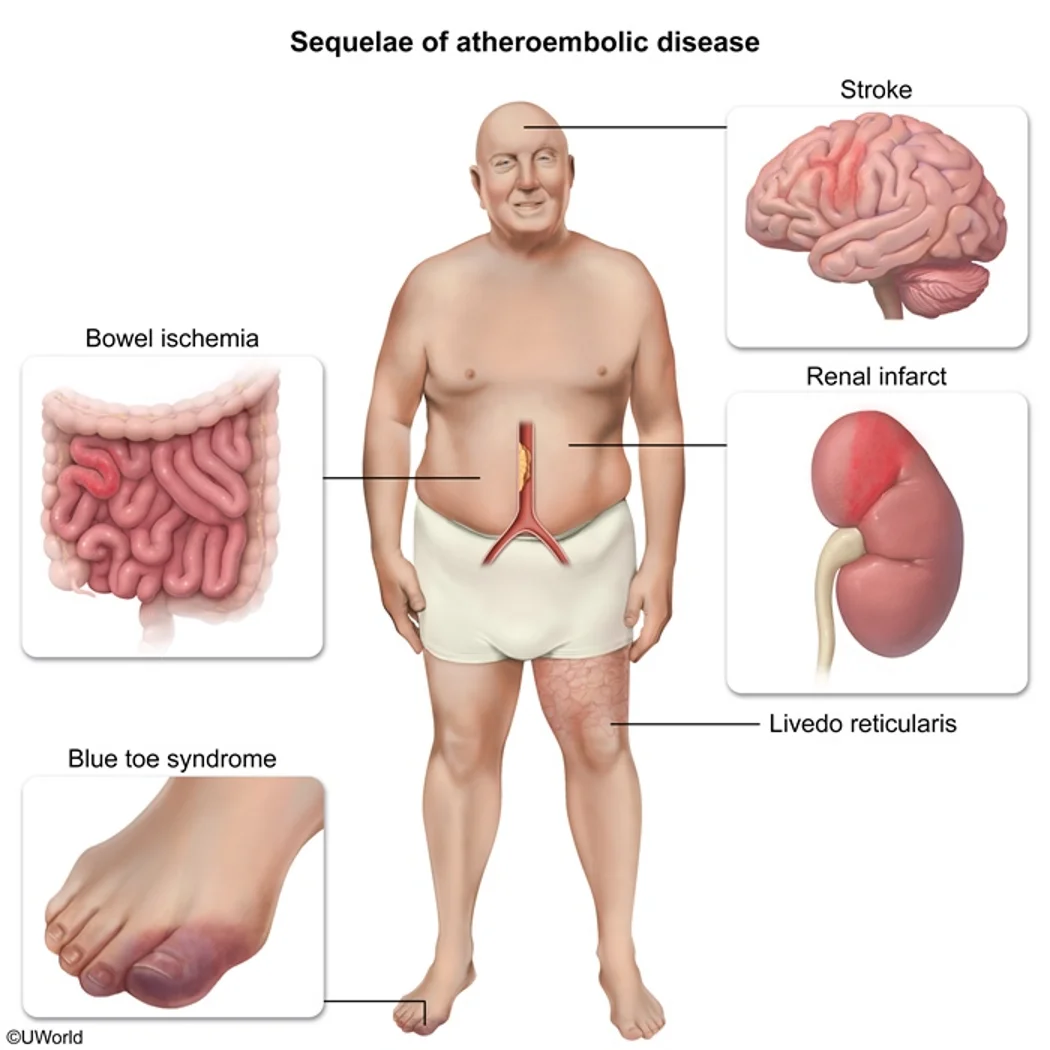
What this shows
Showers to many organs
each organ has its sign.- Kidney: acute kidney injury.
- Skin: livedo reticularis (reticulated, mottled, discolored skin), blue toe syndrome (cyanotic toes with intact pulses), gangrene and ulcers.
- Neurologic: stroke, amaurosis fugax.
- Gastrointestinal: pancreatitis, mesenteric ischemia.
- Eye: Hollenhorst plaques, which are bright, yellow, refractile plaques in a retinal artery; they point to a proximal source such as the internal carotid artery.
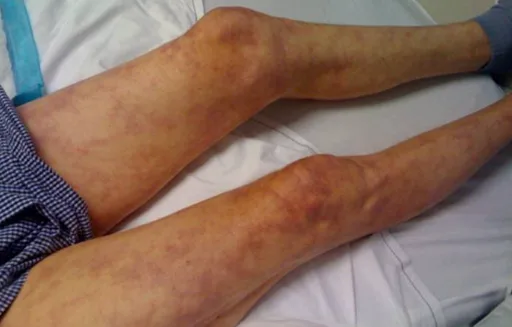
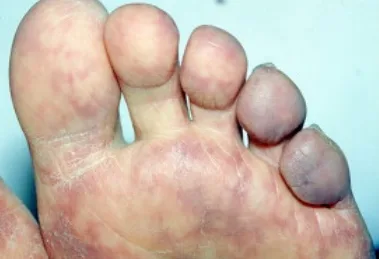
What this shows
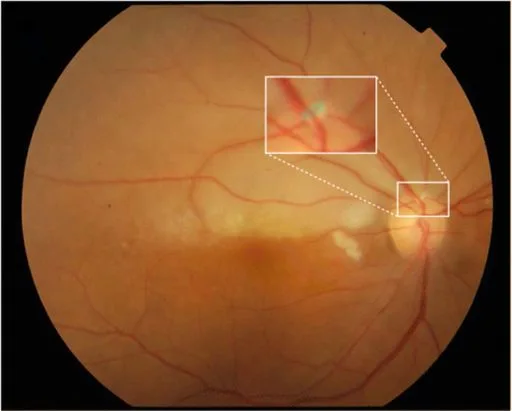
What this shows
Diagnosis
Labs
elevated creatinine, eosinophilia and low complement.Urinalysis
typically benign, with few cells or casts; eosinophiluria may be present.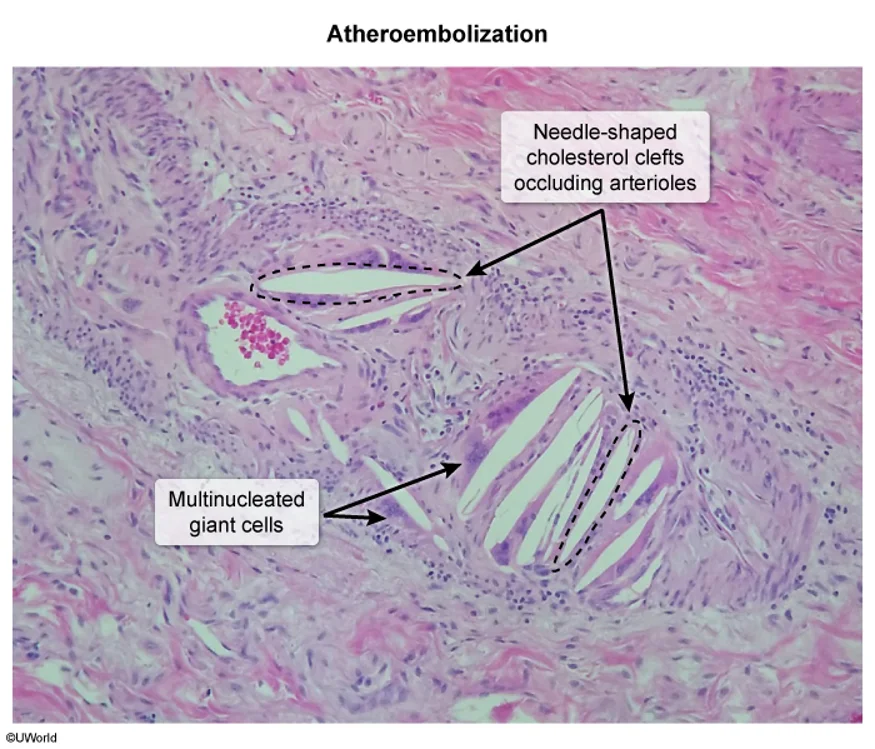
What this shows
Biopsy confirms it
biconvex, needle-shaped clefts inside occluded vessels.Management
Primarily supportive
with optimization of atherosclerotic cardiovascular disease (ASCVD) management.Large emboli with organ damage
angioplasty or endovascular grafting.Two weeks after cardiac catheterization a patient has a rising creatinine, mottled legs and cyanotic toes with palpable pedal pulses. What is the diagnosis, and which two blood findings support it?
Cholesterol embolism (atheroembolism) from plaque disturbed by the catheter. The pulses stay palpable because only small arteries are blocked. Eosinophilia and low complement support it, and a biopsy shows needle-shaped cholesterol clefts.
How it's tested
Ten days after coronary angiography a 70-year-old smoker has mottled purple skin on both legs, painful blue toes with normal dorsalis pedis pulses, a creatinine up from 1.2 to 2.6, and eosinophilia: cholesterol embolism syndrome; supportive care and a statin; do not anticoagulate.
Bright refractile plaques at a retinal arteriole bifurcation with transient monocular blindness: Hollenhorst plaque; atheroembolism from the carotid or aorta; look for the source.
Creatinine that peaks 48 hours after contrast and recovers by a week: contrast nephropathy, not atheroembolism; the timing and the absence of skin findings separate them.
What does the biopsy show: needle-shaped clefts in small arteries surrounded by eosinophils and giant cells.
Go deeper
Related Step 2 pages: Acute Coronary Syndrome, Acute Limb Ischemia, Hyperlipidemia, Approach to Aortic Syndromes
High-yield images5
You just read one page of 236
The rest of Step 2 CK, written exactly like this.
Rapid Review is the reading layer of a full Step 1 platform: a schedule fitted to your exam date, flashcards for every page, and a mentor a message away.
Every Step 1 system
Written the same way: what to know, how it’s tested, where to go deeper.
A plan built to your exam date
Tell us when you sit, and the schedule fits the whole library and your question bank to it.
Flashcards for every page
Ready-made spaced-repetition decks linked to each topic, so nothing you read gets forgotten.
