
Rapid Review·Cardiovascular
Select any text to highlight it or add a note.
Pericardial Disease
T1Must knowPericardial Effusion
Focus on
Fluid in the sac is often silent; what matters is how fast it came and whether it compresses the heart. Echo sizes it and looks for tamponade physiology; a stable patient gets treatment of the cause, an unstable one gets a needle. Two vignettes carry the diagnosis: fever and rigors after cardiac surgery (purulent) and weeks of night sweats in an immigrant (tuberculous).
Key takeaways
What it is and what causes it
Pericardial effusion
fluid between the visceral and parietal layers of the pericardial sac.Causes
four groups.- Pericarditis of any cause.
- Malignancy.
- Hypervolemia (heart failure, cirrhosis, nephrotic syndrome).
- Trauma or ventricular wall rupture (hemopericardium).
Clinical features and diagnosis
Often asymptomatic.
Impaired cardiac function
dyspnea, especially lying down (orthopnea), and retrosternal chest pain.Compression of neighbours
hoarseness, nausea, dysphagia, hiccups.Examination
four findings.- Muffled heart sounds.
- A friction rub if pericarditis is present.
- A soft or non-palpable apex beat.
- Ewart sign: dullness with bronchial breathing (and raised vocal fremitus) at the left lung base from compressed lung.
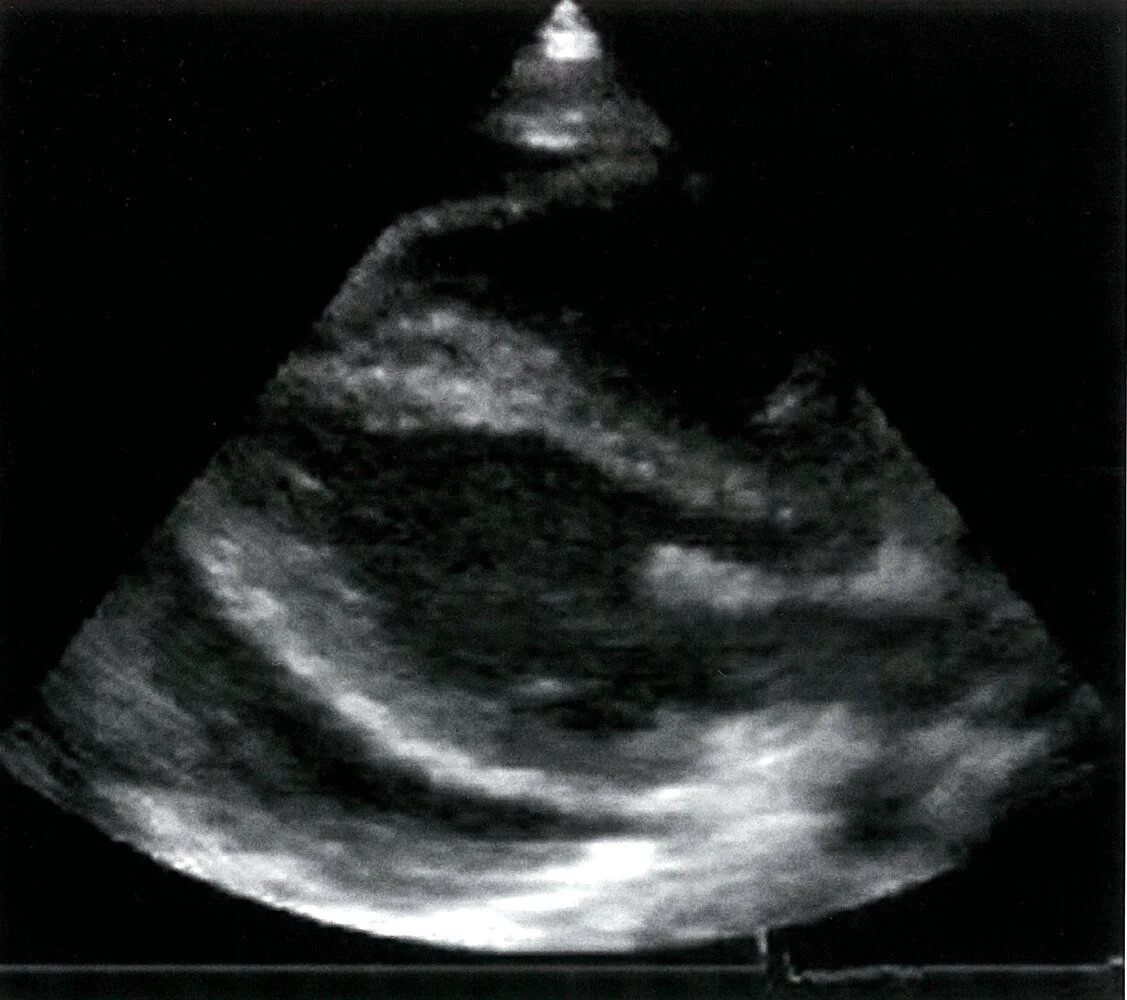
What this shows
Transthoracic echocardiography (TTE)
best for sizing the effusion and judging hemodynamic compromise.Electrocardiogram (ECG)
low-voltage QRS and electrical alternans (with a large effusion).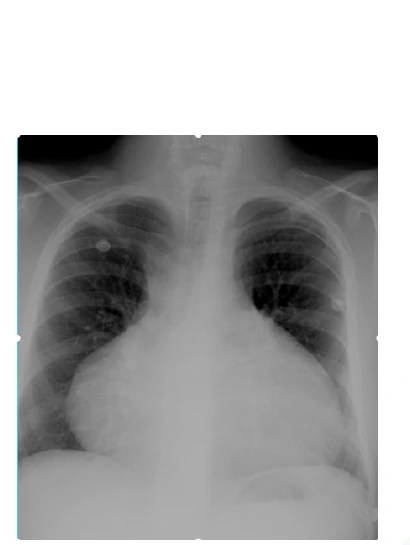
Chest radiograph
a "water bottle" heart when the effusion is large.Pericardial fluid analysis
when the cause is unclear.Management
Stable patient
treat the underlying disease, give supportive care, and follow with TTE; a small effusion is managed conservatively.Pericardiocentesis
for a large symptomatic effusion or one of uncertain cause.Surgical drainage (pericardiotomy, pericardiectomy, pericardial window)
for traumatic, purulent or loculated, rapidly reaccumulating, or malignant effusions.Hemopericardium from penetrating chest injury
treated surgically as soon as possible; pericardiocentesis is only a bridge when surgery is unavailable.Unstable patient
treated as Cardiac Tamponade.Three special effusions
Purulent effusion
hematogenous or direct intrathoracic spread (pneumonia, surgery).- Risk with immunosuppression, hemodialysis, recent cardiothoracic surgery or trauma.
- Staphylococcus aureus is the most common organism; also Streptococcus pneumoniae, Salmonella, Candida and tuberculosis.
- Acutely and severely ill: fever, chills, chest pain; can be rapidly fatal.
- Raised erythrocyte sedimentation rate (ESR) and C-reactive protein (CRP), tachycardia and diffuse ST elevation with or without low voltage, an enlarged silhouette with clear lungs, and an effusion on echo.
- Echo cannot tell purulent from serous fluid, so urgent pericardiocentesis both confirms and treats: turbid, neutrophil-rich fluid with high protein and low glucose.
- Then pericardial fluid and blood cultures and empiric intravenous antibiotics (vancomycin, ceftriaxone or meropenem), narrowed to culture; surgical drainage or intrapericardial fibrinolysis if loculated.
Tuberculous effusion
spread from pulmonary tuberculosis, insidious onset over weeks.- Cough, dyspnea, weight loss, fatigue, intermittent fever, hemoptysis.
- Because the fluid accumulates slowly the pericardium stretches, so up to 2 L collects, giving a globally enlarged silhouette and subacute tamponade (chest pressure, orthopnea).
- Pericardiocentesis shows lymphocytosis, high protein and lactate dehydrogenase (LDH), and a high adenosine deaminase (sensitive, not specific).
- A positive acid-fast smear or culture confirms it (specific, not sensitive).
- Treat with RIPE therapy (rifampin, isoniazid, pyrazinamide, ethambutol) for 6 months.
Malignant effusion
may be the first sign of a cancer or its recurrence.- Lung, breast, gastrointestinal, lymphoma and melanoma are the usual primaries.
- Progressive dyspnea, chest fullness and fatigue, with the same ECG, echo and radiograph findings as any effusion.
- Pericardiocentesis relieves symptoms and gives cytology.
- Because it recurs in up to 60 percent, a pericardial window or prolonged catheter drainage prevents recurrence.
Five days after cardiac surgery, a patient develops high fever, rigors and tachycardia, and echo shows a rapidly growing pericardial effusion. What is the likely diagnosis and the step that both confirms and treats it?
Purulent pericarditis (recent cardiothoracic surgery is a risk factor; Staphylococcus aureus is the most common organism). Echo cannot tell pus from serous fluid, so urgent pericardiocentesis confirms and treats it, followed by cultures and empiric IV antibiotics.
How it's tested
Incidental 12 mm effusion on echo in a patient with dyspnea from COPD, no JVD or hypotension: observe and treat the cause — no needle.
Five days after CABG: fever 39.5 °C, rigors, tachycardia and a fast-growing effusion: purulent pericarditis — surgical drainage and IV antibiotics.
Three weeks of dyspnea, night sweats and weight loss in a recent immigrant with a large effusion: tuberculous pericarditis — pericardial fluid adenosine deaminase and anti-tuberculous therapy.
Large effusion with alternating QRS amplitude on the ECG: electrical alternans — a swinging heart; check for tamponade physiology on echo.
Dullness and bronchial breathing at the left base with a water-bottle heart on the film: Ewart sign from a large effusion compressing the lung.
Go deeper
Guidelines: 2025 ESC Myocarditis and Pericarditis Guideline
Related Step 2 pages: Acute Pericarditis, Cardiac Tamponade, Constrictive Pericarditis, Cardiac Anatomy
High-yield images2
You just read one page of 236
The rest of Step 2 CK, written exactly like this.
Rapid Review is the reading layer of a full Step 1 platform: a schedule fitted to your exam date, flashcards for every page, and a mentor a message away.
Every Step 1 system
Written the same way: what to know, how it’s tested, where to go deeper.
A plan built to your exam date
Tell us when you sit, and the schedule fits the whole library and your question bank to it.
Flashcards for every page
Ready-made spaced-repetition decks linked to each topic, so nothing you read gets forgotten.
