
Rapid Review·Cardiovascular
Select any text to highlight it or add a note.
Syncope
T1Must knowReflex Syncope
Focus on
A trigger, a prodrome of warmth, nausea and sweating, a brief collapse and a fast recovery. Vasovagal (standing, heat, pain, blood), situational (cough, micturition, defecation, swallowing) and carotid sinus (tight collar, shaving, older men). Reassurance, fluid and salt, counterpressure maneuvers; a pacemaker only for recurrent cardioinhibitory episodes with documented asystole.
Key takeaways
Mechanism and triggers
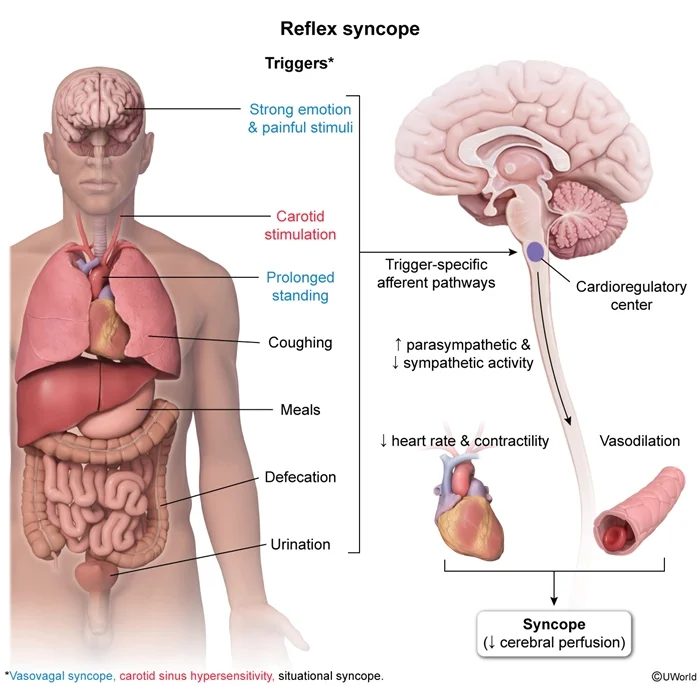
What this shows
Mechanism
a surge of parasympathetic outflow causes transient bradycardia, reduced contractility and peripheral vasodilation, so the pressure and cerebral perfusion fall.Common and benign
the most common cause of syncope at every age.Vasovagal triggers
emotional stress, pain, fear and anxiety (especially in children), heat, prolonged standing, the sight of blood or needles.- Often on a background of dehydration, fasting or alcohol.
Situational triggers
syncope with cough or sneeze, micturition (older men with prostatic hyperplasia voiding at night), defecation, swallowing, after meals, laughing or hair-combing.Carotid sinus syndrome
What it is
recurrent reflex syncope from a hypersensitive carotid sinus when pressure is applied (a tight collar, shaving, head turning).Risks
age over 50, coronary atherosclerosis, and prior neck surgery or irradiation.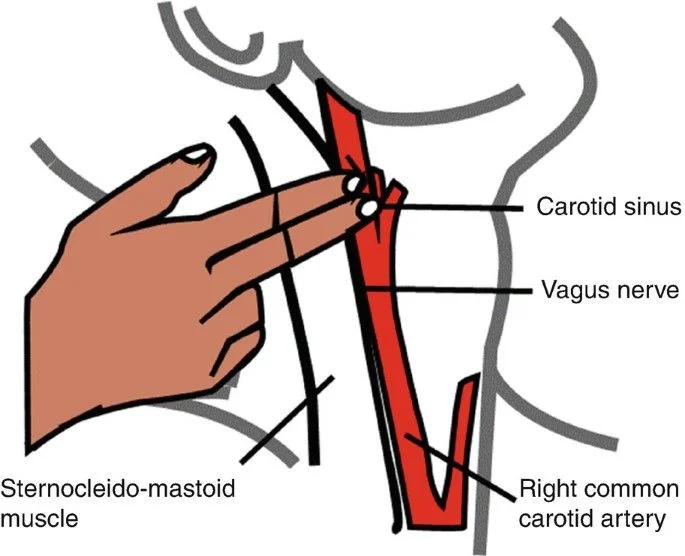
What this shows
Diagnosis
carotid sinus massage causes a pause of 3 seconds or more and/or a systolic fall of 50 mm Hg or more.Treatment
avoid triggers (loose collars); a pacemaker if cardioinhibitory and recurrent.Clinical features and diagnosis
An autonomic prodrome
warmth, nausea, diaphoresis and pallor, a feeling of being unwell.A brief collapse
a slow weak pulse and rapid recovery (under 1 to 2 minutes) with full orientation.Warmth and sweating before the collapse
point to vasovagal syncope.Convulsive syncope
a few myoclonic jerks after the fall do not make it a seizure.Clinical diagnosis
the trigger, prodrome and recovery in a patient with a normal examination and electrocardiogram and no heart disease; orthostatic vitals exclude Orthostatic Hypotension.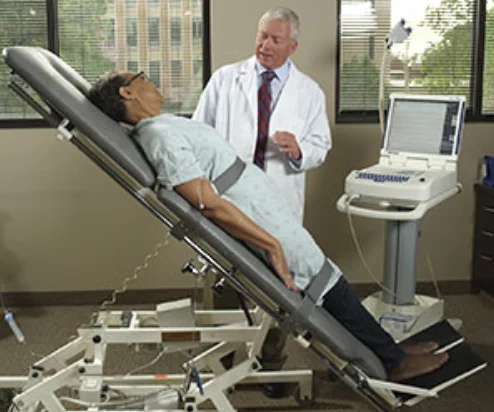
What this shows
Tilt-table testing
rarely needed (recurrent, atypical or injury-causing episodes).- A positive test reproduces the syncope with hypotension or bradycardia and indicates vasovagal or orthostatic syncope.
| Reflex | Orthostatic Hypotension | Cardiac | |
|---|---|---|---|
| Setting | Trigger: standing, pain, heat, cough, micturition | On standing; drugs, volume loss, autonomic failure | Exertion, supine, any time |
| Prodrome | Warmth, nausea, sweating, pallor | Lightheadedness on standing | None, or palpitations |
| Heart rate at the event | Slow | Rises (or fails to in autonomic failure) | Fast (ventricular tachycardia) or very slow (block) |
| Orthostatic vitals | Normal | Fall of 20/10 within minutes | Normal |
| Electrocardiogram | Normal | Normal | Abnormal |
| Risk | Benign; injury only | Falls; the underlying disease | Sudden death |
Management
Reassurance
the first step.Recurrent episodes
avoid triggers and lie supine with legs raised at the onset of symptoms.Physical counterpressure maneuvers during the prodrome
they abort most episodes by raising venous return and cardiac output.- Leg crossing with tensing of the leg muscles, handgrip, and arm tensing with clenched fists.
Fluid and salt
fluid 2 to 3 L/day and salt 6 to 9 g/day unless contraindicated; stop or reduce diuretics, vasodilators and alpha blockers.Drugs for recurrent disabling episodes despite the above
midodrine; fludrocortisone in the young without hypertension.Pacemaker
only for recurrent reflex syncope in patients 40 or older with documented asystole (cardioinhibitory carotid sinus syndrome, asystolic vasovagal syncope); it does not help the vasodepressor form.Situational
treat the trigger (cough suppression, sitting to void, stool softeners, treat the esophageal disease).A 19-year-old faints while having blood drawn; she felt hot, nauseated and sweaty first, and was fully alert within a minute. Her examination and electrocardiogram are normal. What is the diagnosis, is a tilt test needed, and what can she do next time she feels it coming?
Vasovagal (reflex) syncope, a clinical diagnosis; tilt-table testing is rarely needed. Reassure, avoid triggers, lie down with the legs raised at the first symptoms, and use counterpressure maneuvers (leg crossing with muscle tensing, handgrip, arm tensing).
How it's tested
A 17-year-old faints during venipuncture after feeling hot, nauseated and sweaty; normal ECG: vasovagal syncope — reassurance, hydration, and lie down or use counterpressure maneuvers when the prodrome starts.
A 70-year-old man passes out while urinating at night: micturition (situational) syncope — void sitting, review nocturnal antihypertensives and alpha blockers.
A 65-year-old faints while buttoning a tight collar; carotid massage produces a 5-second pause: cardioinhibitory carotid sinus syndrome — permanent pacemaker if recurrent.
Recurrent vasovagal syncope despite fluids and maneuvers in a normotensive 30-year-old: midodrine (or fludrocortisone).
What do leg crossing and handgrip do: raise venous return and blood pressure during the prodrome and abort the episode.
Go deeper
Guidelines: 2017 ACC/AHA/HRS Syncope Guideline
Related Step 2 pages: Approach to Syncope, Orthostatic Hypotension, Natriuretic Peptides & Cardiovascular Reflexes, Sinus Bradycardia, Cardiac Implantable Devices
High-yield images3
You just read one page of 236
The rest of Step 2 CK, written exactly like this.
Rapid Review is the reading layer of a full Step 1 platform: a schedule fitted to your exam date, flashcards for every page, and a mentor a message away.
Every Step 1 system
Written the same way: what to know, how it’s tested, where to go deeper.
A plan built to your exam date
Tell us when you sit, and the schedule fits the whole library and your question bank to it.
Flashcards for every page
Ready-made spaced-repetition decks linked to each topic, so nothing you read gets forgotten.
