
Rapid Review·Cardiovascular
Select any text to highlight it or add a note.
Arrhythmias: Bradycardia & Devices
T1Must knowSick Sinus Syndrome
Focus on
An older patient with fatigue, dizziness or syncope whose monitor shows sinus pauses, bradycardia, and bursts of atrial fibrillation — tachy-brady syndrome. The PR is constant (the problem is the sinus node, not the AV node). A pacemaker for symptoms without a reversible cause, then a beta blocker for the tachycardias and anticoagulation for the AF.
Key takeaways
What it is and what causes it
Sick sinus syndrome
the sinoatrial node cannot generate an adequate rate, producing sinus pauses, bradycardia and the tachy-brady syndrome.Causes
age-related fibrosis of the sinus node is the most common; also ischemia and infiltrative disease (sarcoidosis, amyloidosis).Clinical features
Bradycardia
fatigue, dizziness, exertional dyspnea, confusion, presyncope or syncope.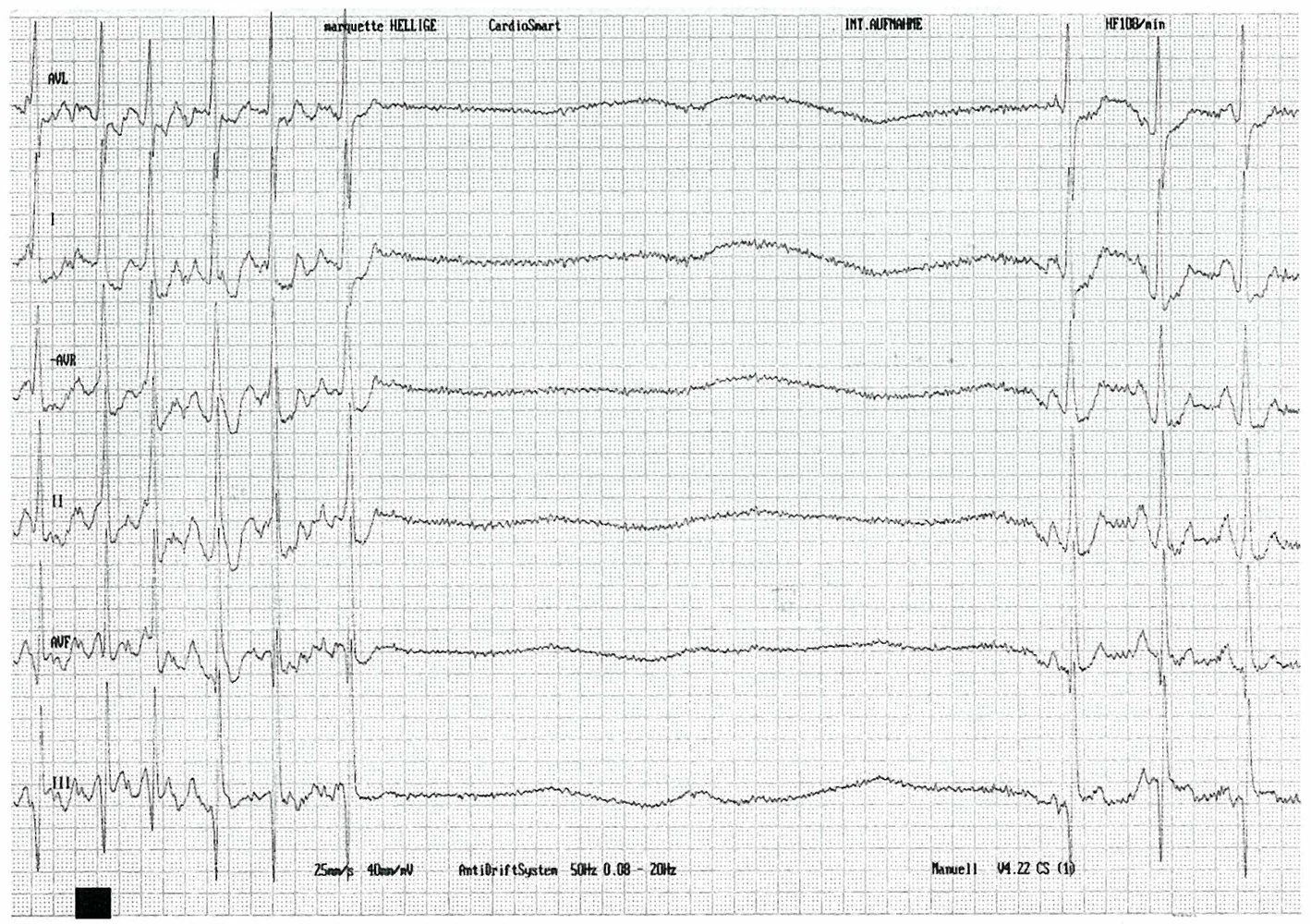
What this shows
Tachy-brady
paroxysmal atrial arrhythmias (atrial fibrillation), and alternating bradycardia and supraventricular tachycardia.Diagnosis
12-lead electrocardiogram (ECG)
the preferred initial study.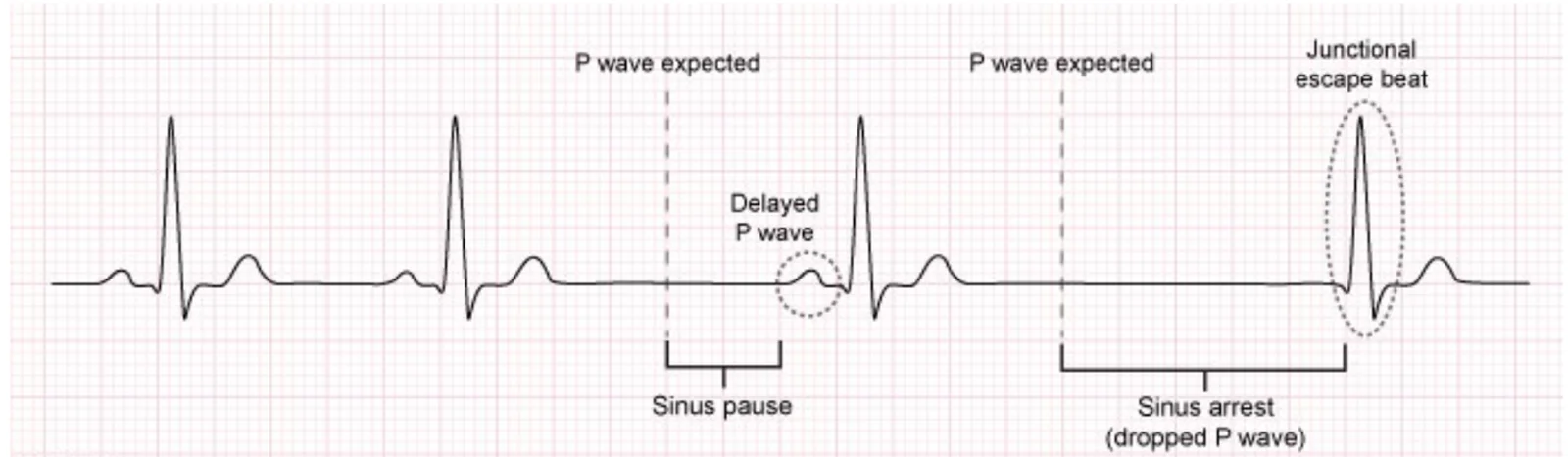
What this shows
Telemetry
sinus bradycardia, sinus pauses (late P waves), sinus arrest (dropped beats), junctional escape beats, and alternating fast and slow rhythms.Constant PR, variable P-P
the PR interval stays constant (unlike heart block); it is the P-P interval that varies, with P waves that come late or not at all.Chronotropic incompetence
the rate cannot rise with demand, reaching under 80 percent of the age-predicted maximum on an exercise ECG.Management
Reversible causes first
ischemia, drugs, vagal tone.Symptomatic, no reversible cause
a permanent pacemaker.After the pacemaker
a beta blocker can control any persistent paroxysmal tachyarrhythmia.An 80-year-old has dizzy spells; telemetry shows runs of atrial fibrillation that end in 4-second pauses, with a constant PR interval in the sinus beats. What is the diagnosis and the treatment?
Sick sinus syndrome (tachy-brady) from age-related fibrosis. After excluding reversible causes, a permanent pacemaker, then a beta blocker for the tachyarrhythmia.
How it's tested
A 78-year-old with dizziness and one syncope; Holter shows sinus bradycardia at 40, several 4-second pauses, and runs of atrial fibrillation at 140: tachycardia-bradycardia syndrome — permanent pacemaker, then a beta blocker and anticoagulation.
Same patient's symptoms began after diltiazem was started for hypertension: stop the drug and reassess before any pacemaker.
How to tell his pauses from AV block: the PR of every conducted beat is constant and the P waves themselves are missing — the sinus node, not the AV node.
Elderly patient with exertional fatigue whose heart rate only reaches 90 on a treadmill: chronotropic incompetence — rate-responsive pacemaker if symptomatic.
Go deeper
Guidelines: 2018 ACC/AHA/HRS Bradycardia and Conduction Delay Guideline
Related Step 2 pages: Sinus Bradycardia, Atrioventricular Block, Atrial Fibrillation, Cardiac Implantable Devices, Approach to Syncope
High-yield images2
Flashcards for this page
Card 1 of 3 · try-out only, nothing is saved
Cardiac syncope | |
Etiology | Clues to diagnosis |
Aortic stenosis or HCM |
|
Ventricular tachycardia |
|
Sick sinus syndrome |
|
(...) |
|
Torsades de pointes |
|
AV = atrioventricular; HCM = hypertrophic cardiomyopathy; MI = myocardial infarction. |
You just read one page of 236
The rest of Step 2 CK, written exactly like this.
Rapid Review is the reading layer of a full Step 1 platform: a schedule fitted to your exam date, flashcards for every page, and a mentor a message away.
Every Step 1 system
Written the same way: what to know, how it’s tested, where to go deeper.
A plan built to your exam date
Tell us when you sit, and the schedule fits the whole library and your question bank to it.
Flashcards for every page
Ready-made spaced-repetition decks linked to each topic, so nothing you read gets forgotten.
