
Rapid Review·Cardiovascular
Select any text to highlight it or add a note.
Valvular Heart Disease
T1Must knowTricuspid Regurgitation
Focus on
A holosystolic murmur at the left lower sternal border that gets louder on inspiration, giant v waves in the neck and a pulsatile liver. Nearly always functional — a dilated right ventricle from pulmonary hypertension or left heart disease — so treat the cause; primary TR comes from endocarditis in injection drug use, pacemaker leads, carcinoid, rheumatic disease and Ebstein anomaly.
Key takeaways
Causes
Functional regurgitation
from right atrial or ventricular dilation, usually right heart failure.- The annulus stretches, the papillary muscles displace laterally, and the chordae restrict the leaflets.
Primary leaflet or chordal damage
endocarditis in intravenous drug use, injury from a pacemaker or defibrillator lead, rheumatic fever.Carcinoid syndrome
another primary cause.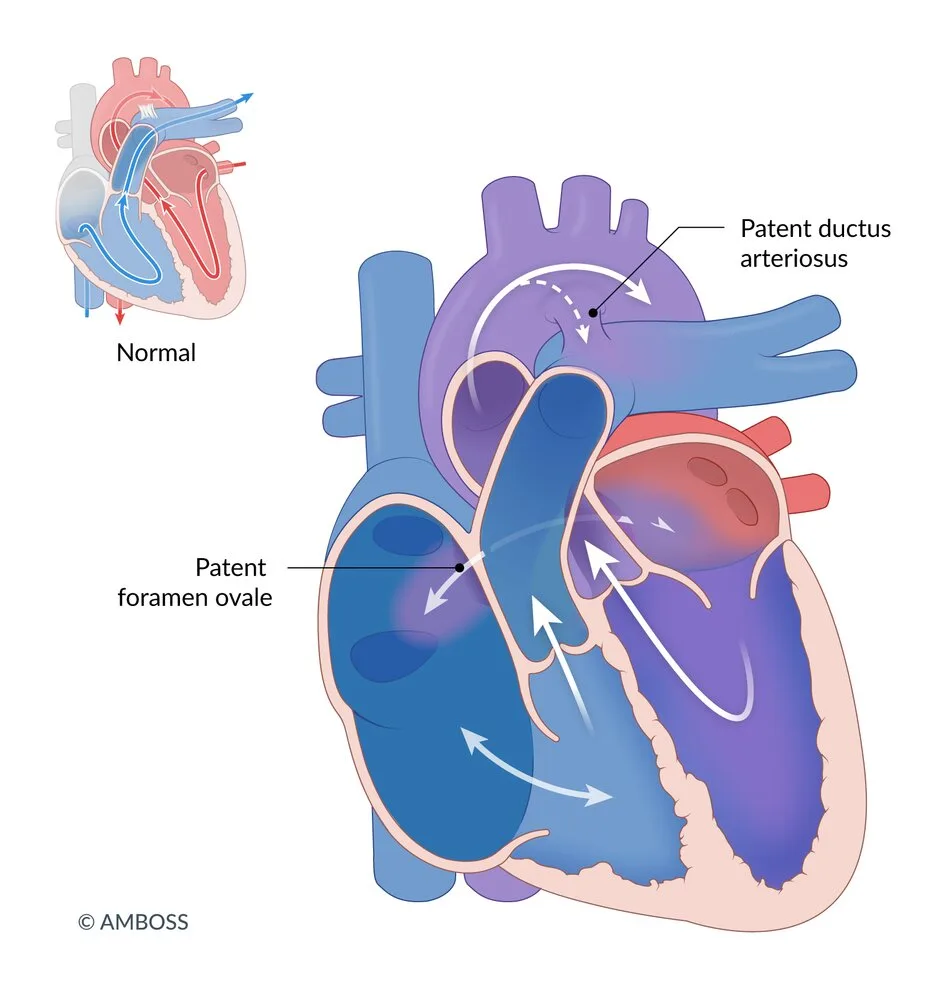
What this shows
Ebstein anomaly
atrialization of the right ventricle.Clinical features and diagnosis
Right-sided congestive failure
jugular venous distension, a right ventricular heave, hepatomegaly, peripheral edema.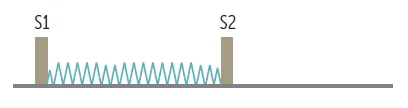
What this shows
The murmur
a holosystolic murmur at the left lower sternal border.Transthoracic echocardiography
confirms it.Management
Functional regurgitation
treat the underlying disorder.Primary valve disease
consider tricuspid repair or replacement.A woman with mitral stenosis and pulmonary hypertension has jugular venous distension, a pulsatile liver and a holosystolic murmur at the left lower sternal border that gets louder on inspiration. What type of tricuspid regurgitation is this, and how is it treated?
Functional tricuspid regurgitation: the right ventricle has dilated from pulmonary hypertension, stretching the annulus. Treat the underlying disorder (the mitral stenosis and pulmonary hypertension); repair or replacement is for primary valve disease.
How it's tested
A woman with mitral stenosis and pulmonary hypertension has a holosystolic murmur at the left sternal border that gets louder when she breathes in, with giant v waves and a pulsatile liver: functional tricuspid regurgitation — treat the mitral disease and pulmonary hypertension; annuloplasty at surgery.
Injection drug user with fever, a new tricuspid murmur and cavitating lung nodules: S. aureus tricuspid endocarditis — cultures and IV antibiotics; surgery for heart failure or persistent bacteremia.
Flushing, diarrhea, wheezing and a new right-sided murmur with hepatomegaly: carcinoid heart disease — 5-HIAA, echo, somatostatin analogue.
New TR after pacemaker placement: lead-related leaflet impingement — echo, consider lead revision.
Go deeper
Guidelines: 2020 ACC/AHA Valvular Heart Disease Guideline
Related Step 2 pages: Jugular Venous Pressure, Cor Pulmonale, Infective Endocarditis, Ebstein Anomaly, Heart Sounds & Murmurs, Mitral Regurgitation
High-yield images2
You just read one page of 236
The rest of Step 2 CK, written exactly like this.
Rapid Review is the reading layer of a full Step 1 platform: a schedule fitted to your exam date, flashcards for every page, and a mentor a message away.
Every Step 1 system
Written the same way: what to know, how it’s tested, where to go deeper.
A plan built to your exam date
Tell us when you sit, and the schedule fits the whole library and your question bank to it.
Flashcards for every page
Ready-made spaced-repetition decks linked to each topic, so nothing you read gets forgotten.
