
Rapid Review·Cardiovascular
Select any text to highlight it or add a note.
Vascular: Aorta & Carotid
T2High yieldVertebrobasilar Insufficiency
Focus on
Posterior-circulation ischemia: vertigo with neck rotation, diplopia, dysarthria, ataxia, drop attacks, and the crossed findings of a brainstem stroke — from atherosclerosis of the vertebral or basilar arteries, dissection, or a subclavian steal. CT angiography of the neck; aspirin, statin and risk-factor control; stenting or surgery only for refractory symptoms.
Key takeaways
Causes
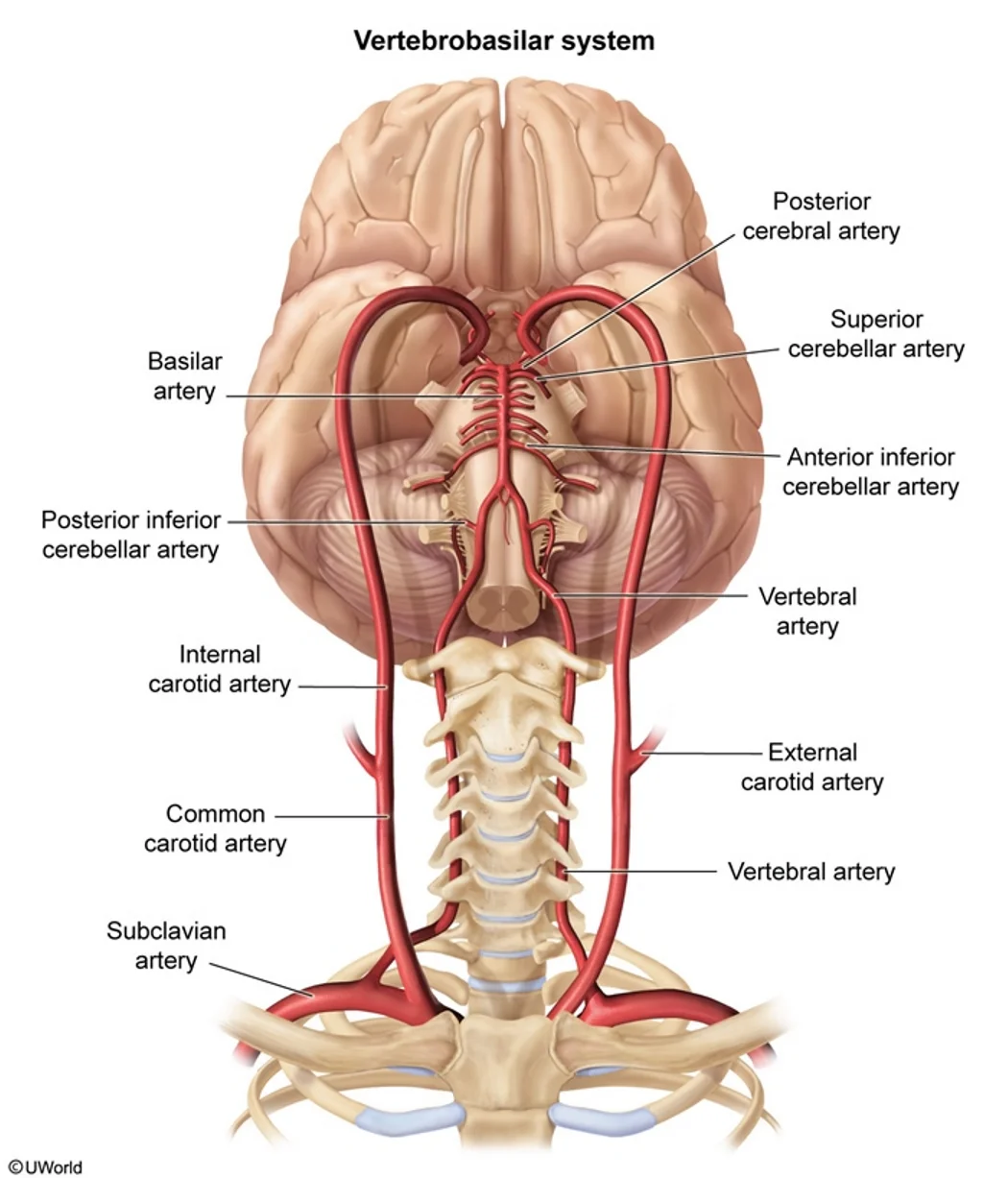
What this shows
Atherosclerotic stenosis of the vertebral artery
the usual cause, with the classic risk factors (smoking, hypertension, diabetes, hyperlipidemia, established atherosclerotic disease).Other causes
thromboembolism (atrial fibrillation), vertebral artery dissection (Carotid Artery Dissection), and subclavian steal (reversed vertebral flow during arm exercise; Subclavian Steal Syndrome).Clinical features
A transient ischemic attack or stroke of the posterior circulation
the brainstem, cerebellum and occipital lobes.Vestibulocerebellar
vertigo and dizziness, classically with neck rotation (turning the neck alters vertebral flow across a fixed stenosis), drop attacks, gait ataxia, dysmetria, vomiting, tinnitus, nystagmus.Ipsilateral cranial nerve dysfunction
medullary nuclei (nucleus ambiguus: dysphagia, dysarthria), gaze palsies with diplopia.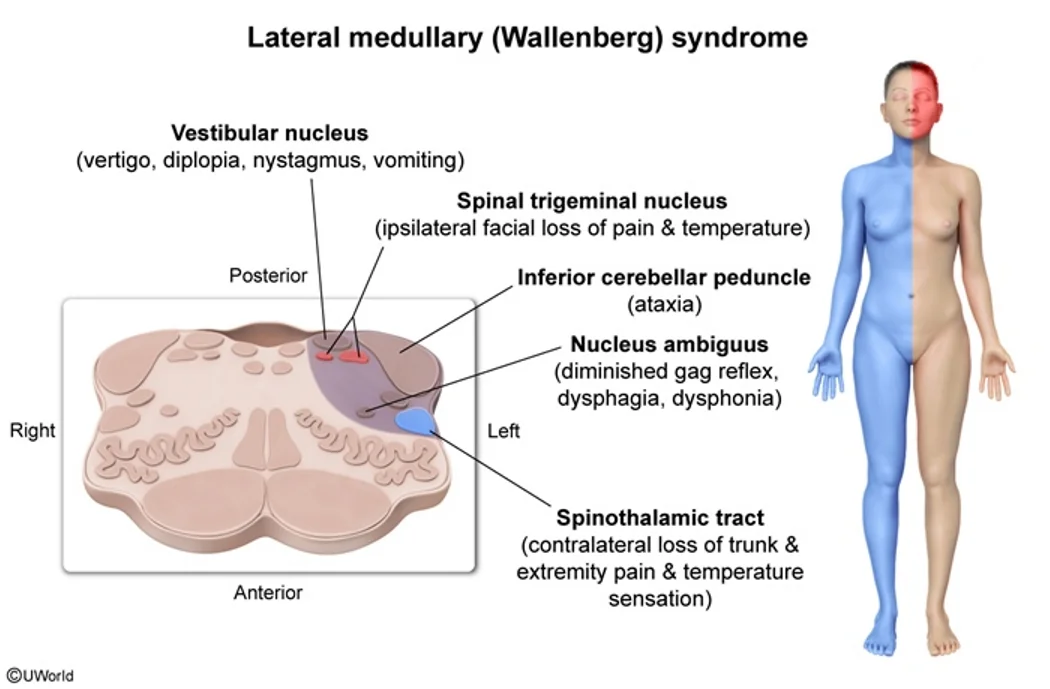
What this shows
Contralateral long-tract signs
contralateral hemiparesis (corticospinal tract) and contralateral loss of pain and temperature (spinothalamic tract).- Crossed or bilateral findings are the signature.
Occipital lobe
contralateral homonymous hemianopia with macular sparing.Basilar occlusion
locked-in syndrome or coma.Isolated dizziness
with no other neurologic sign it is rarely vertebrobasilar.| Vertebrobasilar (posterior) | Carotid (anterior; Carotid Artery Stenosis) | |
|---|---|---|
| Symptoms | Vertigo, diplopia, dysarthria, dysphagia, ataxia, drop attacks, crossed or bilateral deficits, hemianopia | Unilateral face and arm weakness or numbness, aphasia, neglect, amaurosis fugax |
| Trigger | Neck rotation, arm exercise (steal), hypotension | Usually none (embolic) |
| Imaging | CT angiography of the neck and intracranial vessels; magnetic resonance imaging (MRI) brain for cerebellar and brainstem infarcts that CT misses | Carotid duplex, CT or MR angiography |
| Revascularization | Rarely; stenting for refractory symptomatic vertebral-origin stenosis | Endarterectomy for symptomatic 70 to 99 percent |
Diagnosis and management
Computed tomography (CT) angiography of the neck whenever suspected
magnetic resonance (MR) angiography as the alternative.Other tests
MRI brain with diffusion for posterior infarcts; electrocardiogram and monitoring for atrial fibrillation; both arm pressures (a difference over 15 mm Hg suggests subclavian steal).Lifestyle
smoking cessation, blood pressure reduction, glucose control, diet, exercise.Medications
statin and low-dose aspirin; anticoagulation only for a cardioembolic source.Acute posterior stroke
thrombolysis within the window and mechanical thrombectomy for basilar occlusion.Stenting
of a vertebral-origin or subclavian stenosis only for recurrent symptoms despite medical therapy.A 72-year-old smoker gets brief vertigo, diplopia and slurred speech whenever he turns his head to reverse the car. Which circulation is involved, what is the first imaging test, and what is the treatment?
Vertebrobasilar insufficiency (neck rotation alters flow across a vertebral stenosis). Get CT angiography of the neck (MRI brain for posterior infarcts). Treat with statin, low-dose aspirin and risk-factor control; stenting only for symptoms despite medical therapy.
How it's tested
A 70-year-old diabetic smoker has episodes of vertigo, diplopia and slurred speech lasting minutes, brought on by turning his head to back up the car: vertebrobasilar insufficiency — CT angiography of the head and neck; aspirin, statin, risk-factor control.
Vertigo, ipsilateral facial numbness and Horner syndrome, contralateral loss of pain and temperature in the body, dysphagia and hoarseness: lateral medullary (Wallenberg) syndrome from vertebral/PICA occlusion — MRI, stroke care.
Dizziness and arm claudication when using the left arm, with a 30 mm Hg lower pressure in that arm: subclavian steal syndrome.
Sudden bilateral weakness, coma and pinpoint pupils: basilar artery occlusion — CT angiography and thrombectomy.
Isolated vertigo with a positive head-impulse test and unidirectional horizontal nystagmus, no other deficit: peripheral vestibular neuritis, not vertebrobasilar disease.
Go deeper
Guidelines: 2021 AHA/ASA Secondary Stroke Prevention Guideline
Related Step 2 pages: Carotid Artery Dissection, Carotid Artery Stenosis, Subclavian Steal Syndrome, Approach to Syncope, Approach to Aortic Syndromes
High-yield images2
You just read one page of 236
The rest of Step 2 CK, written exactly like this.
Rapid Review is the reading layer of a full Step 1 platform: a schedule fitted to your exam date, flashcards for every page, and a mentor a message away.
Every Step 1 system
Written the same way: what to know, how it’s tested, where to go deeper.
A plan built to your exam date
Tell us when you sit, and the schedule fits the whole library and your question bank to it.
Flashcards for every page
Ready-made spaced-repetition decks linked to each topic, so nothing you read gets forgotten.
